Updated 19 November 2026.
If your Madrid flat feels cold even with the heating on, where you feel the discomfort can tell you which renovation to investigate first. A draught beside a shutter box calls for a different fix from a cold floor above a communal garage. In a top-floor flat or a detached house, the roof may deserve attention before the boiler. Start with the rooms you use and the energy you pay for.
Why some homes in Madrid cost more to heat and cool
Madrid’s cold winters and hot summers make orientation important. A north-facing room receives little direct winter sun, while a west-facing living room can overheat late on a summer afternoon. Shade, wind exposure and the position of a flat within its building all affect comfort.
The thermal envelope consists of the walls, roof, floors and windows separating your living space from outdoors or from unheated areas. In an older building, insulation may be thin or interrupted. A concrete column that conducts heat through an otherwise insulated wall is one example of a thermal bridge. Gaps can also let air leak through, and poorly controlled heating can compound the cost.
Which upgrades should you investigate first?
| Upgrade | Likely benefit and cost | Where it makes sense |
|---|---|---|
| Insulation | High potential where exposure is significant. Medium to high cost. | Uninsulated walls, top floors and homes above cold spaces. External work needs coordination. |
| Windows and shutters | Better comfort near the glass. Low to medium cost for repairs, medium to high for replacement. | Single glazing, worn fittings or persistent draughts. Check façade restrictions. |
| Air sealing | Targeted relief from draughts. Usually low cost. | Leaking joints, shutter boxes and service penetrations in flats or houses. |
| Heating and cooling | High potential with inefficient existing equipment. Medium to high cost. | Homes due for a system upgrade, once the remaining heating demand is known. |
| Solar energy | Savings depend on when you use electricity or hot water. Medium to high cost. | Suitable private or communal roofs with adequate space and limited shading. |
| Controls and lighting | Low to medium cost. Savings depend on current settings and hours of use. | Overheated rooms, irregular occupancy or older lamps used for long periods. |
Start with your bills and an energy assessment
Gather twelve months of electricity and fuel bills. Compare consumption in kWh as well as the amount paid. Record when the heating runs, which rooms stay uncomfortable and whether the problem changes with wind or direct sun. In a block with communal heating, check how much of your charge varies with use.
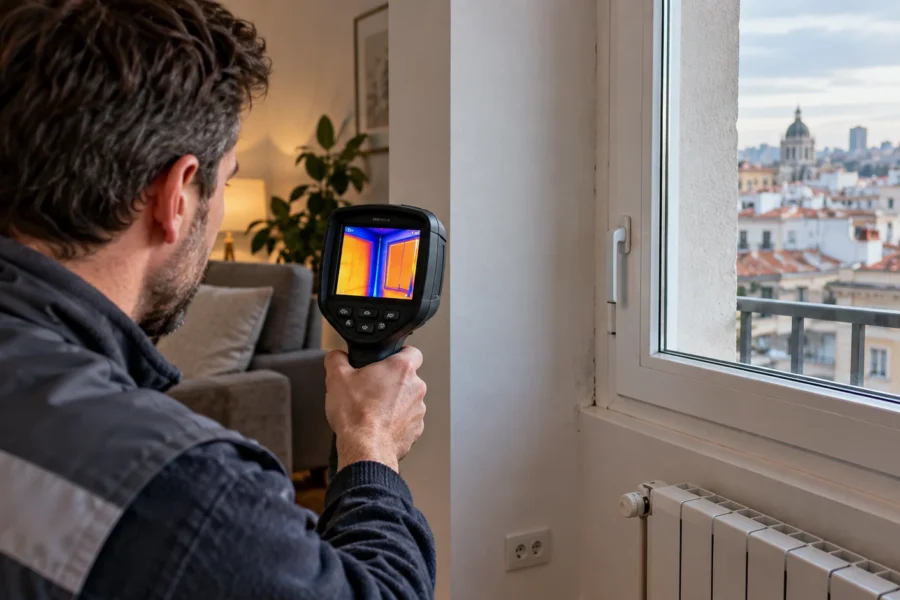
A Spanish energy performance certificate (certificado de eficiencia energética) rates the home under standard conditions. An energy audit can go further by assessing actual consumption and comparing specific improvements. If you intend to claim tax relief, arrange the required pre-work certificate before construction begins. How energy ratings work in Madrid homes.
1. Insulate the surfaces that lose the most heat
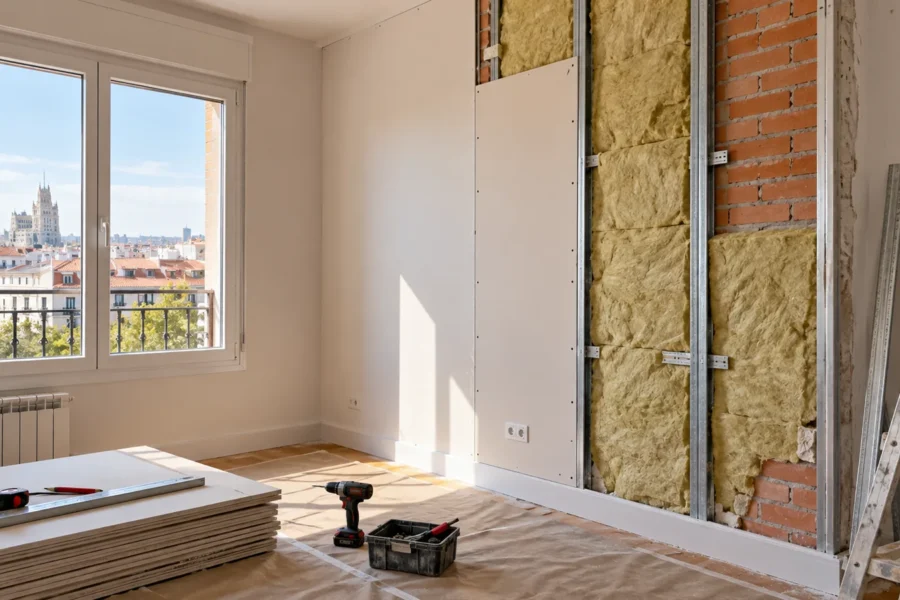
- External walls. Continuous external insulation can cover junctions at columns and floor slabs. Internal insulation may be an option where the façade must be preserved, although it takes up floor space and needs a condensation assessment.
- Roofs. In a detached house or top-floor flat, check what separates the ceiling from the roof. If waterproofing already needs renewal, ask for the additional cost of insulating during the same works.
- Floors. A ground-floor flat over an open passage or unheated garage can have a persistently cold floor. Check moisture, available headroom and who owns the surface from which the work would be carried out.
- Cavity walls. Before specifying blown insulation, establish the cavity’s depth, continuity and condition. Columns and other interruptions can still conduct heat after filling.
Spain’s Institute for Energy Diversification and Saving (IDAE) gives an indicative saving of around 30% for the insulation improvements considered in its guide. The saving from treating a single wall depends on how much heat escapes through it. For a realistic payback estimate, ask the assessor to model your property. IDAE insulation guide · Wall insulation options in Madrid.
2. Assess the whole window, including the shutter box
Before replacing a window, check the seals, hinges, frame-to-wall joint and roller shutter box. If the frame is sound and a sash simply fails to close tightly, an adjustment may resolve the draught. If replacement is justified, ask for the whole-window U-value. This measures how readily heat passes through the glass and frame together. A lower figure means less heat transfer.
Low-emissivity glazing helps limit heat loss. A thermal break reduces heat flow through a metal frame. For west-facing windows, also compare external shading and how much solar heat the glass admits. Savings and payback depend on the original windows, glazed area, orientation and quality of installation.
3. Seal unwanted air leaks and preserve ventilation
Sealing defective joints can make a noticeable difference beside a window or balcony door. The energy saving depends on how much air was leaking, so a reliable percentage requires an assessment. Keep designed air inlets, extraction grilles and combustion air supplies clear. When a renovation makes the home more airtight, ask how fresh air will enter bedrooms and living areas and how humid air will leave kitchens and bathrooms. Spanish Building Code, ventilation guidance in section HS 3.
4. Size the heating system for the renovated home
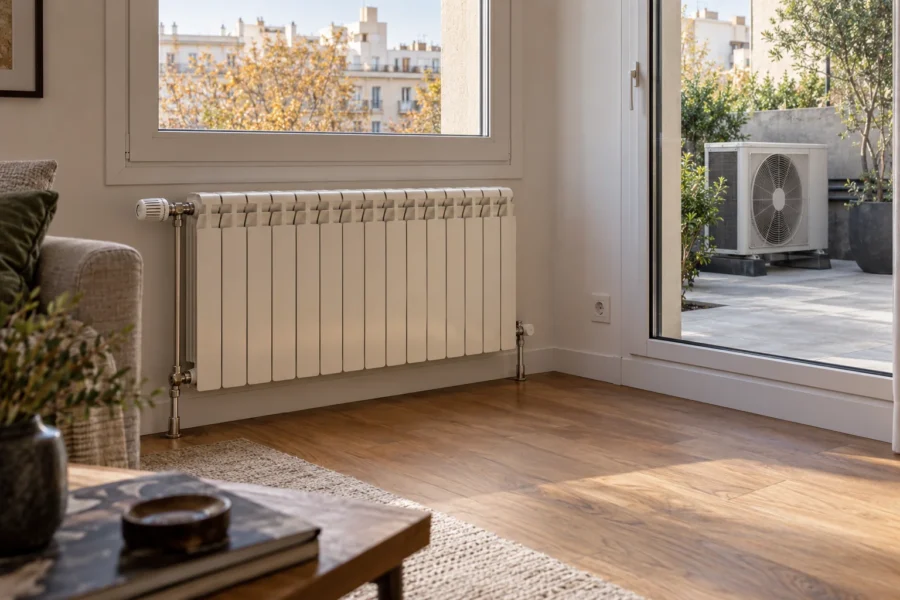
An air-source heat pump, commonly called aerotermia in Spain, draws heat from outdoor air. An air-to-air unit heats or cools rooms. An air-to-water system can supply radiators or underfloor heating and, depending on its design, domestic hot water.
For example, a seasonal performance factor of 3 to 4 means that 1 kWh of electricity delivers 3 to 4 kWh of heat on average. For the same heat output, that would use around 67–75% less electricity than direct electric resistance heating. If you currently have a gas or oil boiler, compare the existing boiler’s efficiency, the proposed pump’s seasonal performance and the prices of both fuels. A more efficient replacement boiler may also reduce fuel use.
Ask what water temperature your radiators will need on a cold day. Check electrical capacity, outdoor-unit noise, space for a hot-water cylinder and any communal approvals. These details affect both installation cost and payback. Using a heat pump with existing radiators in Madrid · IDAE heat pump guide.
5. Choose solar panels according to what you use
Solar photovoltaic panels generate electricity. Compare expected hourly output with your daytime consumption to estimate how much grid electricity you could avoid buying. IDAE illustrates a payback of 6–10 years for a four-person household under its example assumptions. Request a calculation using your roof, tariff, shading and usage pattern. IDAE guide to generating your own electricity.
Solar thermal collectors heat water. IDAE gives an indicative annual coverage of 50–80% of domestic hot-water demand. Your household’s hot-water use determines the value of that contribution. Allow for storage, backup heating and maintenance. Either technology requires a suitable roof, structural and waterproofing checks, and the applicable permissions. IDAE solar thermal guide.
6. Improve heating controls and frequently used lighting
A programmable thermostat adjusts heating to your schedule. Thermostatic radiator valves can limit overheating in individual rooms. IDAE gives an indicative 8–13% saving on heating energy for these controls. Check compatibility with the heating circuit before zoning rooms, especially in a block with communal heating.
Replacing incandescent lamps with LEDs can cut electricity use by more than 80% for those lamps. Start with lights that stay on longest. Where the home already has LEDs, insulation or heating upgrades may offer greater scope. IDAE household energy-saving guidance.
Permissions for flats, shared roofs and protected buildings
Owners can usually arrange minor internal repairs or individual controls themselves. Façades, roofs and central systems are normally common elements. Before ordering new window frames, fixing an outdoor unit to a wall or reserving roof space for panels, ask the building administrator which approvals your comunidad de propietarios (owners’ association) needs. Voting rules depend on the work and its financial terms. Spanish Horizontal Property Act, Article 17.
Within Madrid city, the scope of the work and the building’s protected status determine whether a formal declaration of compliance (declaración responsable) or a municipal licence is required. Historic façades can have restrictions on frame profiles, finishes and visible equipment. Check the municipal procedure as well as the owners’ agreement. Other Madrid municipalities have their own procedures. Madrid City Council guidance.
Spanish tax relief and Madrid grants as of 19 November 2026
- Individual homes. Qualifying Spanish personal income tax (IRPF) deductions include 20% for a certified reduction of at least 7% in combined heating and cooling demand, or 40% for a reduction of at least 30% in non-renewable primary energy consumption or an A or B rating on that indicator. The annual expenditure caps are €5,000 and €7,500 respectively. Eligible works run to 31 December 2026, with the post-work certificate issued before 1 January 2027.
- Whole residential buildings. The 60% deduction requires a qualifying improvement at building level. The eligible expenditure cap is €5,000 annually and €15,000 cumulatively. The works deadline is 31 December 2027, with the post-work certificate issued before 1 January 2028. Spanish Tax Agency guidance.
- Renewable electricity for self-consumption. Separate 10% or 20% deductions may apply to eligible installations completed and paid for in 2026. The maximum annual expenditure base is €5,000. The same installation cannot also attract the energy renovation deduction. Check eligibility, payment records and the electrical installation certificate. Spanish Income Tax Act, additional provisions 50 and 62.
- Madrid grants. The regional PRTR programmes 3, 4 and 5 and the city’s Plan Rehabilita Madrid 2026 are closed to new applications. Check the official pages for future calls before including a grant in your budget. Community of Madrid programmes · Madrid City Council’s Rehabilita programme.
Eligibility depends on the taxpayer, the use of the property and the supporting documents. If you own a Madrid home but file tax as a non-resident, check which rules apply to you before relying on IRPF relief. Ask your adviser to confirm certificate dates, qualifying payments and how grants affect deductible expenditure.
How to plan the work and check the result
- Collect your bills and identify where and when discomfort occurs.
- Ask a qualified assessor to compare the most promising measures individually and together. Their savings can overlap.
- Confirm communal approvals, permits and pre-work certificates before committing to the work.
- Compare itemised quotes covering VAT, finishes, access equipment, professional fees and administrative costs.
- Estimate simple payback by dividing the net investment by expected annual net savings. Check how maintenance, financing and changes in energy prices would affect your decision.
- After the work, check the controls and compare consumption over periods with similar weather, occupancy and indoor temperatures.
The upgrades that offer the most value usually address the largest losses first and match the heating system to the home’s remaining needs. A warmer bedroom or a living room that stays comfortable on summer afternoons can matter alongside the financial return. If you are planning work in Madrid, tell us your property type, heating system and which rooms you want to improve. Request a renovation assessment from Maceta y Cortafrío.