Can you paint over damp walls? You can sometimes cover a damp stain temporarily, but painting will not remove the moisture or fix its source. If the wall is still damp, the new finish may blister, peel or become stained again, even when an anti-damp paint has been used.
In a Madrid flat, villa, block of flats or commercial property, identify the cause before paying for redecoration. The visible stain may be far from where the problem started.
What causes damp patches on walls?
A damp patch offers clues, but different moisture problems can look similar. Appearance alone cannot confirm the cause.
Condensation and insufficient ventilation
Condensation forms when humid indoor air meets a cold surface. Poor ventilation or thermal bridges — areas where heat escapes more easily — can contribute.
Typical signs: water droplets on windows, dark spots in corners, mould behind furniture placed close to external walls and patches that become more noticeable at certain times of year.
Ventilation can help, but it cannot correct defective insulation. See our guide to thermal bridges in Madrid.
Water ingress through façades, roofs, terraces or windows
Rainwater can enter through defective waterproofing, cracks, joints or window and roof junctions.
Typical signs: stains on ceilings or external walls, patches that grow after rainfall, and peeling paint near windows or terraces. The stain may be far from where water enters.
Leaks from plumbing and drainage installations
A leaking pipe, waste connection or concealed fitting can keep walls damp without any rainfall.
Typical signs: a persistent, localised wet patch; deterioration near bathrooms or kitchens; or a problem that becomes worse when a particular shower, sink or appliance is used. Leaks are not always immediately obvious.
Rising damp
Rising damp is ground moisture moving upwards through porous masonry when an effective barrier is missing or defective.
Typical signs: deterioration near the base of a wall, loose plaster and white salt deposits, sometimes known as efflorescence. In ground-floor premises or basements, similar marks can also result from leaks or rainwater ingress.
What happens if you paint over damp without fixing it?
Fresh paint may hide a mark temporarily, but there is no reliable timeframe. Results depend on the cause, substrate and coating.
- Stains can return if moisture continues to enter or build up in the wall.
- Paint can blister, flake or peel because the coating loses adhesion or the underlying plaster deteriorates.
- Mould may return if the conditions supporting its growth remain unchanged.
- Musty smells may persist, while plaster, timber, skirting boards and other finishes continue to deteriorate.
- Repair costs may increase when recently painted surfaces have to be stripped and repaired again.
Persistent damp and mould can affect indoor air quality. The Community of Madrid’s guidance on indoor environmental quality discusses moisture-related problems in enclosed spaces. The World Health Organization’s guidelines on indoor air quality, dampness and mould identify associations with increased risks of certain respiratory symptoms. Not every damp patch carries the same level of risk.
How to identify the source before repairing a damp wall
Record when and where the damp appears. Does it worsen after rain, near plumbing or at the base of a wall? Are other properties affected?
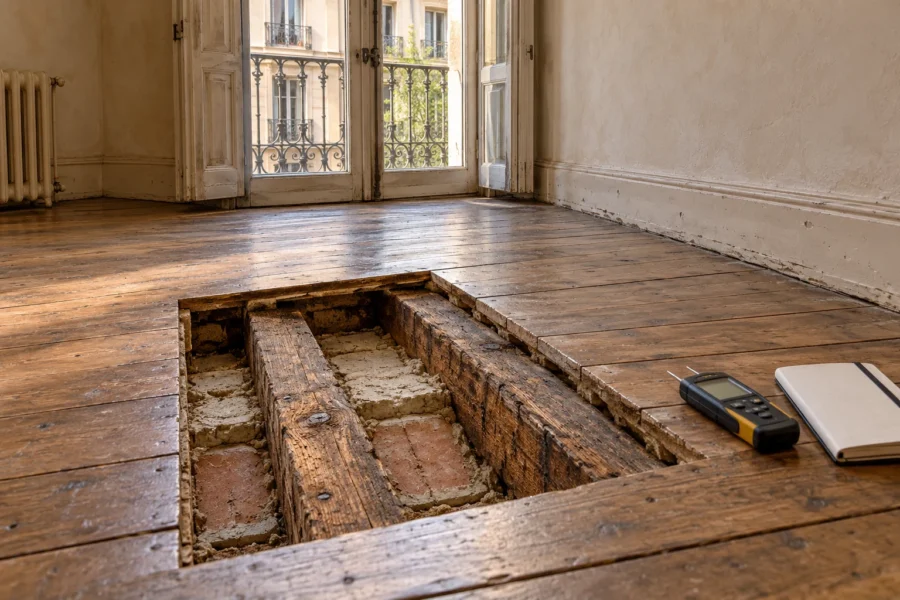
A professional may inspect roofs, façades, windows, plumbing, ventilation and ground contact, using moisture meters or installation checks where appropriate.
A single moisture-meter reading does not establish the cause. Readings need to be interpreted alongside the material, the location and the building’s condition.
If stains spread, recur or affect several flats, seek an assessment before painting. Our waterproofing and damp-treatment service in Madrid explains how different sources of moisture call for different repairs.
How to repair a damp wall properly: six essential stages
- Identify the cause. Investigate whether the problem is caused by condensation, external water ingress, a plumbing leak, rising damp or a combination of factors.
- Correct the source of moisture. Repair the defective pipe, waterproofing system or construction junction; address ventilation and cold surfaces; or specify an appropriate treatment for confirmed rising damp. The appropriate solution depends on the diagnosis.
- Allow the wall to dry and check the substrate. Drying depends on materials and conditions; a surface can feel dry while retaining moisture internally.
- Clean and treat mould safely. Follow product instructions for protective equipment and ventilation. Never mix cleaners or dry-sand mould. Extensive or recurring growth may need specialist treatment.
- Repair damaged finishes. Remove loose or unsound plaster and paint, prepare the surface and replace materials using a compatible repair system.
- Apply a suitable primer and paint. Choose products according to the substrate and the completed repair, rather than relying solely on a label promising damp protection.
Anti-damp paint is not a universal cure. It cannot fix leaks, failed waterproofing or rising damp. Older walls may require breathable finishes.
When does it make sense to repaint a damp-damaged wall?
Repaint after the cause is fixed, the wall is dry and sound, mould is treated and damaged finishes are repaired. Painting then becomes the final stage of the repair, not a way to hide an unresolved defect.
You can also cover an old, dry stain once checks confirm the problem is no longer active.
For the final decorative stage, our professional painting service in Madrid covers preparation, surface repairs and suitable finishes.
What should property owners in Madrid check?
Older flats, ground-floor properties and basements
In older buildings and basements, check construction and previous repairs. Distinguish ground moisture from leaks, rainwater or poor ventilation.
Apartment blocks, façades, roofs and terraces
Rain-related stains may require an exterior inspection. In apartment blocks, coordinate checks with the property administrator or owners’ association without assuming responsibility from the stain’s location.
Commercial premises and seasonal changes
Shops, offices and below-ground areas need checks suited to their use. Seasonal symptoms do not necessarily mean condensation.
Fix the cause before you paint
Painting over active damp is usually a temporary cosmetic measure. The more dependable approach is to find the source of moisture, correct it and then restore the wall with suitable materials.
If you need help with damp walls in Madrid and the cause is unclear, contact Maceta y Cortafrío to discuss a professional assessment before deciding on the repair. If the damage is part of a wider refurbishment, you can also explore our full renovation services in Madrid.
Frequently asked questions about painting over damp
Can I paint a wall if it no longer looks wet?
Appearance alone is not enough. First confirm that the source has been resolved and that the wall is dry, stable and suitable for the chosen finish.
Will anti-damp paint stop mould coming back?
Not on its own. If moisture and the conditions that encourage mould remain, the problem can return even after a specialist paint has been applied.
Who should I contact if I cannot find the source of the damp?
Contact a professional who can assess the wall and relevant installations. Depending on the findings, a plumber, waterproofing specialist or building refurbishment professional may need to be involved.