Last updated: 19 August 2026
Choosing materials for a renovation is not about finding the most expensive product, the most striking finish or the latest trend. The right decision depends on how the property will actually be used, durability, maintenance, installation requirements and the real cost over time.
In a full renovation in Madrid, materials should be assessed as part of a complete construction system. A high-quality visible finish can still perform poorly if the substrate, adhesive, joints, waterproofing or installation are not suitable.
That is why material selection should be approached from a wider perspective than appearance alone.
Start with how the property will actually be used
The first question should not be “Which material do I like?” but “How will this space actually be used?”
A family home does not necessarily require the same materials as a rental property, second home or property with pets.
Before choosing a material, consider:
- frequency of use;
- exposure to moisture;
- cleaning frequency;
- possible impacts and wear;
- exposure to direct sunlight;
- children or pets;
- the possibility of future repairs.
A material can be an excellent choice in one area and unsuitable in another.
Do not evaluate only the visible surface
One of the most common mistakes is comparing only the finish that can be seen.
In reality, long-term performance depends on the complete system.
For example:
- a tile depends on the substrate, adhesive and joints;
- a floor depends on correct preparation of the base;
- a door depends on its frame, hardware and adjustment;
- a worktop depends on accurate measurement, support and installation;
- a shower depends on waterproofing, falls and drainage.
Saving money on the hidden elements can sometimes create much greater costs later.
Durability does not simply mean “harder”
Durability depends on how well a material performs in the conditions where it is installed.
Even a highly resistant material can fail if:
- the substrate moves;
- installation is incorrect;
- joints are poorly designed;
- the product is used in an unsuitable location.
The best choice combines appropriate technical performance with correct installation.
Think about maintenance before buying
A material can look excellent in a showroom and later become unnecessarily demanding to maintain.
Before making a decision, ask:
- How is it cleaned?
- Does it require specific cleaning products?
- Does it need periodic treatments?
- Does it stain easily?
- Can damaged areas be repaired locally?
- Are replacement parts likely to remain available?
Ease of maintenance is particularly important in kitchens, bathrooms and high-traffic areas.
The real cost is more than the purchase price
Two materials with a similar price per square metre can result in very different final costs.
The real installed cost may include:
- substrate preparation;
- special adhesives or fixing systems;
- specialist labour;
- cutting and material waste;
- sealing and treatments;
- future maintenance;
- replacement costs.
For this reason, comparing catalogue prices alone can lead to poor decisions.
Kitchen materials: resistance and everyday usability
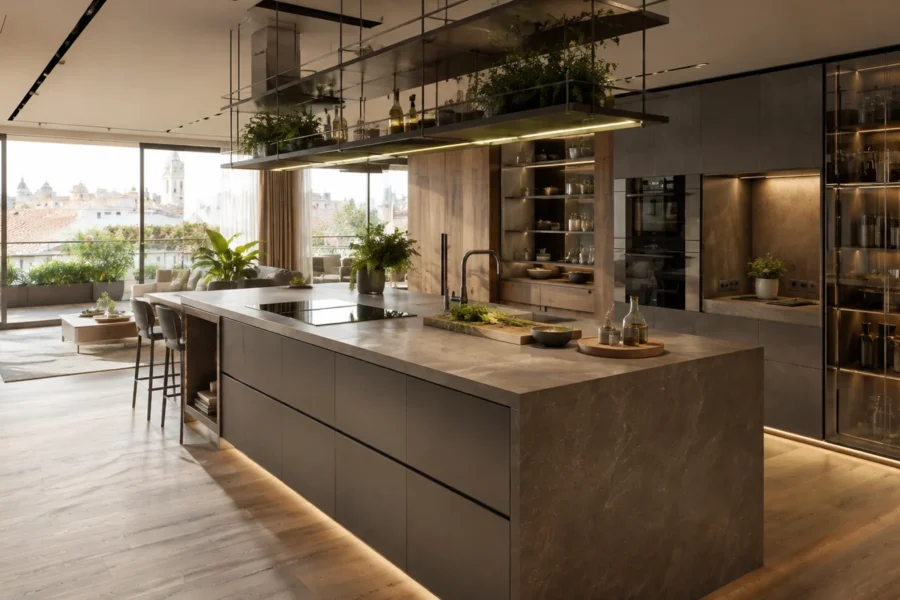
Kitchens combine water, heat, grease, frequent cleaning and intensive everyday use.
Worktops, cabinet fronts, flooring and wall finishes should therefore be selected according to practical performance as well as appearance.
The quality of less visible components is also important, including:
- hinges;
- drawer runners;
- hardware;
- sealing;
- junctions between worktops and walls.
See our Kitchen Renovations in Madrid service.
Bathroom materials: the system matters more than the tile
In a bathroom, ceramic finishes are only one part of the construction system.
Long-term performance depends particularly on:
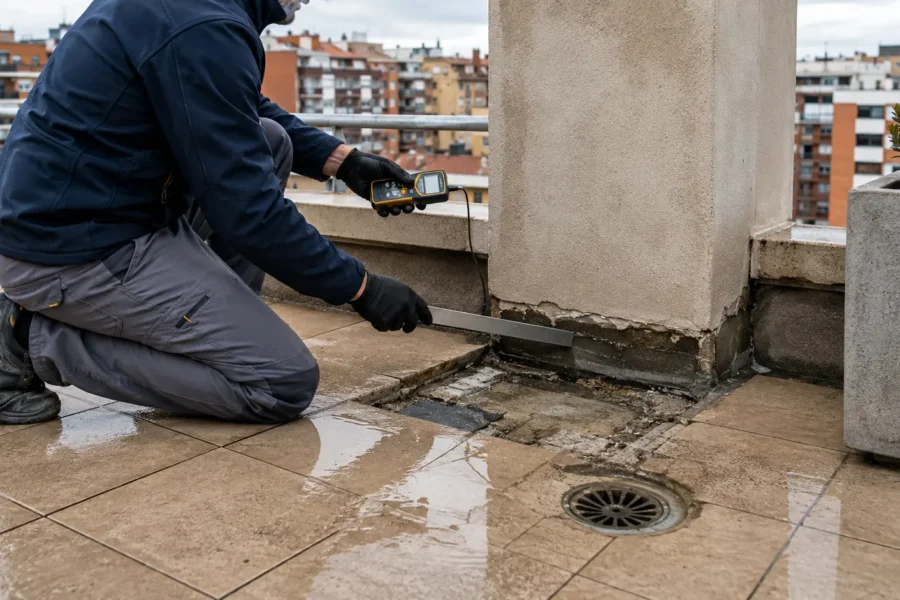
- waterproofing;
- substrate preparation;
- falls and drainage;
- sealing;
- joints;
- plumbing.
A premium tile cannot compensate for poorly executed underlying work.
See our Bathroom Renovations in Madrid service.
Flooring: compare use, maintenance and visual continuity
Flooring has a major influence on how a property is perceived as a whole.
In full renovations, it is often worth considering whether continuous flooring between rooms makes sense or whether different materials are more appropriate for different uses.
When comparing flooring options, consider:
- wear resistance;
- behaviour around water;
- cleaning requirements;
- thermal comfort;
- acoustic behaviour;
- compatibility with the substrate;
- repairability.
Do not let trends decide the entire renovation
Design trends can provide useful inspiration, but the elements that are most difficult or expensive to replace should normally have a longer visual life.
It is useful to distinguish between:
- permanent elements: flooring, wall tiling, fixed joinery, doors, installations and main cabinetry;
- easily updated elements: paint, textiles, decorative lighting and accessories.
This allows the property to evolve over time without requiring another major renovation every few years.
Warm minimalism: less visual noise, better material choices
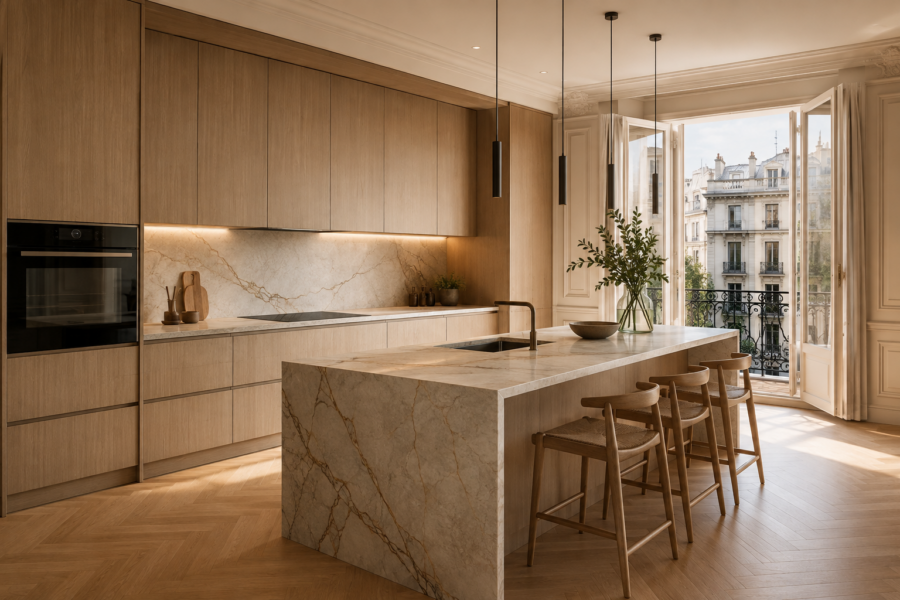
At Maceta y Cortafrío, when the project allows it, we favour an approach based on warm minimalism: clear spaces, natural or natural-looking materials, comfortable textures and a balanced palette.
The objective is not to create empty interiors.
It is to reduce unnecessary elements so that light, proportion, texture and execution quality become more important.
This approach can also help an interior age more gracefully from a visual perspective.
Review samples in the actual property
A material can look very different in a showroom compared with the property where it will actually be installed.
Whenever possible, compare samples with:
- the actual natural light;
- the flooring;
- joinery;
- wall colours;
- the planned artificial lighting.
This is particularly important for materials with strong veining, texture or colour variation.
Pay attention to junctions between different materials
Many visual and construction problems appear at the points where different elements meet.
Examples include:
- transitions between different floor finishes;
- floor-to-wall junctions;
- tile terminations;
- junctions between worktops and wall finishes;
- door frames meeting the floor.
These details should be resolved during the planning stage rather than improvised at the end of the works.
Sustainability also means durability
The environmental performance of a material should not be assessed only through marketing labels or individual claims.
It is also worth considering:
- service life;
- repairability;
- availability of replacement parts;
- maintenance requirements;
- avoiding premature replacement.
A material that performs correctly for many years can be a more responsible choice than one that needs frequent replacement.
Where is it worth spending more?
When the budget is limited, additional investment often makes more sense in elements that would be difficult or expensive to change later.
Depending on the project, these may include:
- substrate preparation;
- waterproofing;
- plumbing and electrical installations;
- high-use hardware;
- surfaces exposed to intensive wear;
- installation quality.
Purely decorative elements allow greater budget flexibility because they can usually be replaced with less disruption.
The right choice is a balance
There is no single perfect material for every renovation.
A good specification should balance:
- use;
- durability;
- maintenance;
- aesthetics;
- installation requirements;
- cost;
- repairability.
When these factors are considered together, the decision is usually far more reliable than choosing materials based on appearance or price alone.
Planning a full renovation in Madrid?
At Maceta y Cortafrío, we coordinate layout, installations, materials and construction so that each decision forms part of a coherent renovation project.
See our Full Renovations in Madrid service or contact us to discuss your property and renovation priorities.