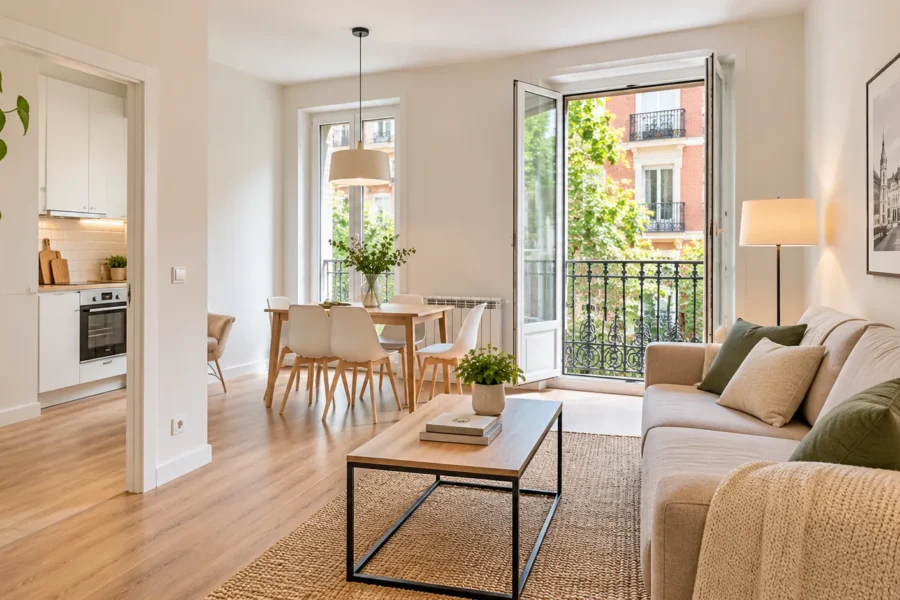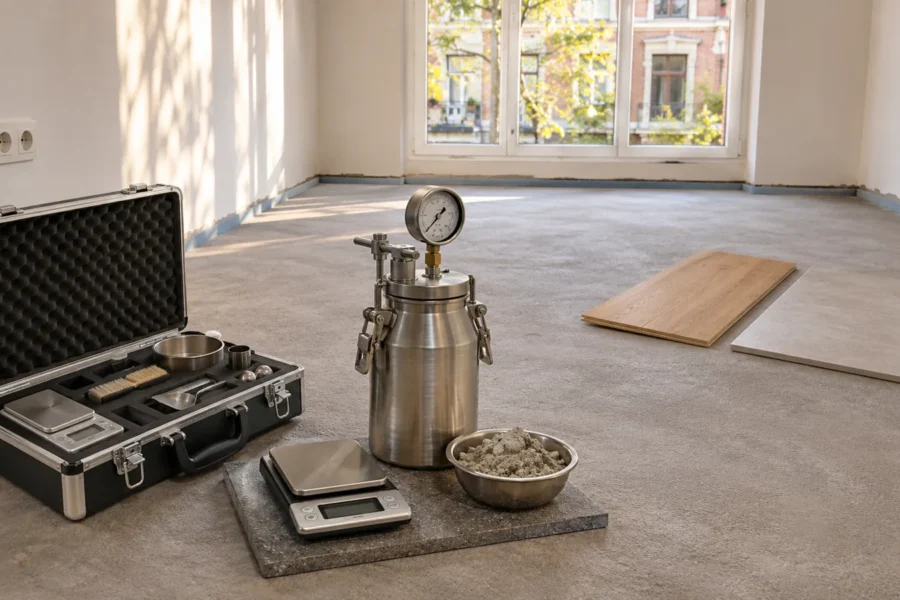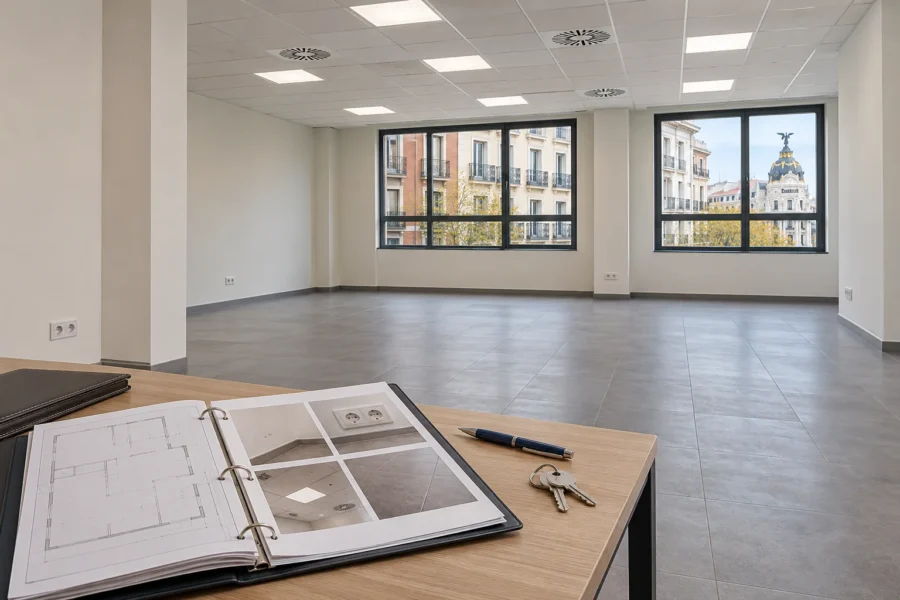
Yes, you can replace flooring in a furnished home, provided the work areas can be cleared and furniture moves are planned. This usually means working room by room while furniture stays elsewhere in the property, rather than fitting flooring beneath sofas and beds without moving them.
Feasibility depends on the flooring, the condition of the base, the amount of furniture, access and layout. Planning these details before hiring a contractor helps you understand the timeline, disruption and extra costs of replacing flooring with furniture in place.
When can you replace flooring without emptying the property?
Working room by room can be practical when there is a spare room for storage, furniture can be moved and the flooring system allows installation in stages. Each work area must remain clear during preparation, installation and any waiting period before furniture can return.
Emptying the property is worth considering when bulky furniture has nowhere to go, the existing floor needs extensive removal, the base requires major repairs or a continuous layout is difficult to divide. It may also be necessary if storing furniture indoors would block entrances, bathrooms or escape routes.
Keeping furniture in rooms that are not being renovated avoids repeated moves.
What affects a flooring replacement in Madrid?
Existing flooring and the installation method
Suitable click-fit laminate or vinyl flooring can be installed over some existing surfaces if they are sound, dry and sufficiently level. The installer must check moisture, unevenness and the finished height: an additional layer can affect doors and appliances.
Floating installation involves fewer wet processes, but needs the specified expansion gaps and freedom to move. Fixed or exceptionally heavy items require detailing according to the manufacturer’s instructions so they do not prevent that movement.
Glued-down flooring requires suitable preparation and the adhesive’s waiting times. Removing the existing floor first adds dust, waste and handling. None of these methods removes the need to clear the work area.
Furniture and flooring continuity between rooms
Moving chairs is different from dismantling a wardrobe or handling a glass cabinet or piano. Weight, fragility, fixings and whether an item can be dismantled all matter. With fitted wardrobes and kitchen units, the extent of the flooring replacement must be agreed.
A continuous finish requires coordinated installation direction and joints. Dividing the work arbitrarily into halves can make fitting more difficult.
Access and the type of property
In Madrid, a flat without a lift, narrow stairs or a distant loading area increases handling. Check lift dimensions and permitted use, parking, waste removal routes and protection for shared entrances.
- Occupied flat: safe routes and access to essential facilities are needed. Dust or blocked circulation may make temporary accommodation sensible.
- Detached house or chalet: another floor may provide storage space, although stairs and larger areas add work.
- Commercial premises: stock, counters, equipment and opening hours affect the sequence. Remaining open requires effective separation and safe circulation.
For a business, flooring should form part of the wider planning for commercial premises renovations in Madrid.
The stages of replacing flooring in a furnished home
- Site visit and measurements: inspect the area, base, moisture, floor heights, furniture and access; agree the sequence.
- Protection: cover furniture and protect doorways, routes, the lift and shared areas as appropriate.
- Dismantling and moving: record the condition of delicate items, empty furniture and move it to a spare room or external storage.
- Removal or preparation: lift the existing flooring where necessary, remove debris and prepare a compatible surface.
- Levelling and repairs: correct defects and check the base is ready to receive the finish.
- Installation: lay the new flooring according to the system’s requirements, including joints and waiting periods.
- Skirting boards, trims and doors: complete junctions and check opening clearances and any necessary adjustments.
- Cleaning and furniture return: inspect the finish and return furniture with suitable protection once the floor can support the intended loads.
How long does flooring replacement take?
The area, number of cuts and condition of the base explain much of the timeline. Furniture adds moves; removal and levelling add operations and waiting periods. These are indicative planning ranges for two professionals working full days, with materials available and no major base repairs:
- A 12–20 m² room: 1–2 working days for floating flooring on a prepared base; 3–5 for ceramic tiles with straightforward removal.
- A flat with 70–90 m² of flooring to replace: 4–7 working days for floating installation with clear work areas; approximately 7–12 when working room by room with successive furniture moves.
- A 50–100 m² commercial unit: 4–8 working days for a suitable floating system in a cleared space; 10–20 with existing floor removal and ceramic tile installation.
These are estimates, not guaranteed deadlines or manufacturer installation times. They exclude supply lead times, administrative procedures and any required acclimatisation. Base repairs, restricted hours or repeated stages can extend them.
Installation time versus time a room is unavailable
A day of installation does not necessarily mean a room is unavailable for only one day. It may remain out of use from clearing until furniture returns. Completed floating flooring on a prepared base may allow early use, subject to instructions; adhesives and levelling compounds have their own waiting periods.
For example, Weber specifies 24 hours before walking on or grouting webercol flex duo. This does not automatically mean heavy furniture can be placed on it. Sika explains that waiting before covering a levelling compound depends on thickness and moisture. The schedule should distinguish walking access, fitting the finish and returning furniture.
Extra costs: what the quotation should specify
A detailed renovation quotation should identify the flooring, installation and supporting materials. Skirting boards, removal, levelling, protection and cleaning may be included or priced separately. Only explicitly listed work should be treated as included.
Check these potential additional items:
| Item | When it applies | Effect on the timeline | How it is priced |
|---|---|---|---|
| Furniture moves and dismantling | Furniture occupies work areas. | Adds handling and reassembly. | By item, hours or agreed package, specifying moves. |
| Storage and transport | No suitable space is available indoors. | Requires collection and return arrangements. | Volume, duration, journeys, access and cover. |
| Special protection | Delicate furniture or shared areas need protection. | Adds setup and removal. | Materials, area covered and labour. |
| Floor removal and debris | The old flooring must be lifted. | Adds removal, loading and disposal. | Area, layers, waste volume and handling route. |
| Waste bags, skips and public space | The waste arrangements require them. | May need advance coordination. | Units, collections, days and applicable fees. |
| Levelling and hidden defects | The base is uneven, damaged or damp. | Adds repairs and technical waiting periods. | Area, thickness and agreed repair method. |
| Doors, skirting boards and trims | The floor height or finish changes. | Adds finishing adjustments. | Doors by unit; skirting boards by linear metre. |
| Phases and extra visits | The job is split into separate stages. | Repeats setup and mobilisation. | Number of phases, visits and labour hours. |
| Restricted or special hours | Building or business conditions affect working hours. | Shortens working days or changes shifts. | Agreed conditions and supplements. |
There is no universal furniture surcharge. Pricing requires an inventory, volume, access details and agreed scope. Compare quotations on the same VAT basis: IVA is the Spanish term for VAT. Check that extras do not duplicate included work.
Calculation example only, not a rate: if a quotation listed €200 for collection, €100 for storage and €200 for return, all including VAT, the total would be €500. Dismantling, protection and damage cover would still need checking.
In Madrid city, placing construction waste bags or skips on public space involves a specific procedure depending on location. This does not automatically reserve the space. Elsewhere in the region, check the relevant municipality’s process; permits should only be budgeted where applicable.
How to reduce costs and disruption
- Empty drawers, remove small belongings and reduce the furniture before work starts.
- Agree a storage room and a route that remains clear.
- Compare internal moves and external storage using the same scope.
- Confirm materials and acclimatisation requirements before clearing rooms.
- Coordinate access and working hours; group compatible finishing tasks.
- Wait for the installer’s approval before returning furniture.
Questions to ask before accepting a quotation
- Which flooring and base preparation are included?
- Who moves, dismantles and returns each item of furniture?
- How many phases and furniture moves are allowed for?
- Are waste removal, protection, skirting boards, doors and cleaning included?
- When can I walk through each area, and when can furniture return?
- How are unforeseen works documented and approved?
- What is the VAT-inclusive total, and what is excluded?
Should you keep furniture indoors or use external storage?
Keeping it in unaffected rooms suits partial renovations. Moving it between rooms can avoid a full move if space and installation stages allow. External furniture storage is worth comparing when furniture obstructs the work or needs repeated handling.
Maceta y Cortafrío can assess your project. Request a site visit or flooring quotation in Madrid, including the approximate area, preferred flooring, furniture and access details. A definitive quotation requires an inspection of the property.
Technical and municipal sources
- Quick-Step: laminate installation and system instructions.
- Sika: preparation and waiting periods for Sikafloor-200 Level.
- Weber: conditions and waiting periods for webercol flex duo.
- Madrid City Council: construction waste skips and bags.
Sources consulted on 5 October 2026. Linked documents are in Spanish. The project timelines are planning estimates, not general deadlines established by these sources.
Frequently asked questions
Can flooring be replaced without removing all furniture from the home?
Yes, if furniture can move to suitable storage areas and installation can proceed in stages. Each work area must be clear.
Can I live in the flat during the work?
That depends on circulation, dust and access to the bathroom and kitchen. Assess these before work starts.
Is moving furniture between rooms cheaper than external storage?
Not always. Repeated moves and dismantling can reduce the saving from keeping furniture indoors.
Can the new flooring go over the old floor?
Some systems allow this if the base and finished height are suitable. The installer must check compatibility.
Does the price per square metre include moving furniture?
Only if the quotation says so. Also check dismantling, furniture return, protection and VAT.