Preparing a property for rent in Madrid does not necessarily mean carrying out a complete renovation or choosing expensive materials. The most effective approach is to focus on improvements that matter to prospective tenants: a well-maintained home, a practical kitchen, a clean and functional bathroom, comfortable living conditions and an attractive presentation.
For landlords and property investors, every renovation decision should balance three factors: investment cost, potential rental appeal and the time needed to complete the work.
A carefully prepared flat may attract more suitable enquiries, create a stronger first impression and reduce objections during viewings. However, no renovation can guarantee a faster letting or a particular rental return.
This guide explains which improvements to prioritise, which can wait and how to prepare a Madrid rental property without unnecessary expenditure or delays.
Which Renovations Should You Prioritise Before Renting Out a Flat?
Before choosing finishes or requesting quotations, divide the proposed work into three categories:
- Essential repairs: resolving leaks, damp problems, faulty installations, safety concerns and defects that prevent the property from being used properly.
- High-impact improvements: repainting, improving lighting, repairing flooring, updating the kitchen or refreshing a deteriorated bathroom.
- Primarily cosmetic upgrades: replacing perfectly functional elements with more fashionable alternatives, adding decorative finishes or installing premium materials.
The first priority should always be a safe, functional property in suitable condition for residential use.
Once essential issues have been addressed, the remaining budget can be directed towards improvements that offer the greatest practical and visual benefit.
For a broader investment perspective, read our guide to renovations that can increase property value in Madrid.
1. Repainting: An Affordable Way to Improve First Impressions
Painting is often one of the first improvements worth considering when a rental property becomes vacant.
Marked walls, visible repairs, strong personal colour choices or uneven finishes can make a flat appear poorly maintained, even when its installations and fittings are in reasonable condition.
Fresh, consistent paintwork, together with repairs to minor surface defects, can make rooms look cleaner, brighter and more welcoming.
Which Colours Work Best for Rental Properties?
Warm whites, soft beige and other neutral shades generally make it easier for prospective tenants to imagine their own furniture and belongings in the property.
In smaller Madrid flats, particularly in areas such as Chamberí, Tetuán or Arganzuela, light-coloured walls combined with suitable lighting can also enhance the perception of space.
Recommended priority: high when the existing paintwork is noticeably worn. If the walls are already in good condition, repainting the entire property may not be necessary.
2. Flooring: Repair or Restore Before Replacing
Flooring has a significant influence on how a property is perceived.
Scratched surfaces, loose tiles, damaged laminate or poorly finished repairs can make a home appear older and less appealing.
However, replacing every floor is not always the most economical solution.
- Wood parquet: consider sanding and refinishing if the timber and its condition allow it.
- Laminate flooring: replace damaged boards where compatible materials are available, or consider wider replacement when wear is extensive.
- Ceramic tiles: repair loose tiles, damaged grout and isolated defects.
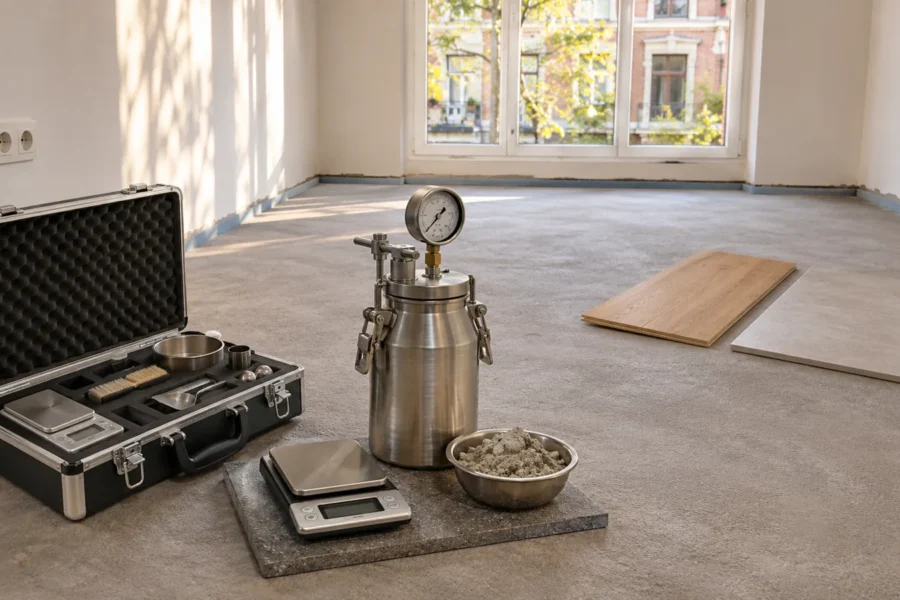
- Vinyl flooring: consider it where the existing substrate is suitable in terms of stability, flatness, moisture and compatibility with the installation system.
Durable, easy-to-clean flooring can be particularly useful in long-term rental properties.
Investor tip: do not replace flooring simply because it is several years old. If it remains functional and presentable, the available budget may be better spent on a kitchen or bathroom that genuinely needs attention.
3. Kitchen Improvements: Prioritise Functionality Over Luxury
The kitchen is one of the areas prospective tenants tend to inspect carefully.
Its condition, layout and storage capacity can influence how practical the property feels during a viewing.
Fortunately, improving a kitchen does not always require removing and replacing everything.
Cost-Effective Kitchen Upgrades
- Replace worn handles and fittings.
- Repair cabinet doors, hinges and drawers.
- Replace a damaged worktop.
- Update defective taps and sinks.
- Improve task lighting.
- Replace faulty appliances where appropriate.
- Renew cabinet fronts when the existing units are structurally sound.
A clean, practical kitchen with adequate storage can be more appealing than an expensive kitchen with an inconvenient layout.
For example, in a compact flat intended for young professionals, sufficient worktop space, accessible storage and reliable appliances may provide more everyday value than premium decorative finishes.
When is a complete kitchen renovation justified? When the layout is unsuitable, installations are deteriorated, cabinetry cannot reasonably be repaired or essential functional problems cannot be solved through partial improvements.
4. Bathroom Renovations: Address Problems That Discourage Tenants
An older bathroom is not necessarily a disadvantage. A bathroom with leaks, damaged sanitary fittings, deteriorated seals or inadequate ventilation is a different matter.
Before committing to a complete renovation, assess the actual condition of the room.
Bathroom Improvements Worth Considering
- Renew damaged grout and seals after identifying the underlying cause.
- Replace defective taps and shower fittings.
- Update the vanity unit and mirror.
- Improve lighting around the washbasin.
- Address ventilation and condensation problems.
- Consider replacing a bathtub with a shower where the intended use and technical conditions support the change.
A walk-in shower may offer greater convenience for some tenants, but it is not automatically the best choice for every property.
In a family-oriented flat, retaining a bathtub may be more practical, particularly for households with young children.
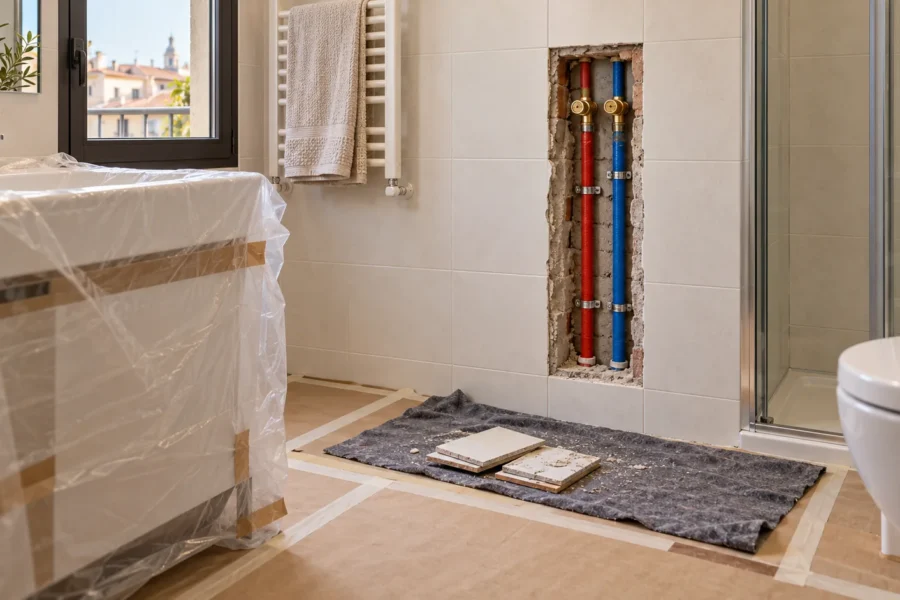
Important: dampness, water ingress and waterproofing defects should be properly diagnosed and repaired before cosmetic work begins.
For an example of the construction work involved, see our documented bathroom tiling, flooring and plumbing renovation in Madrid.
5. Lighting: Make the Property Feel Brighter and More Functional
Poor lighting can make rooms feel smaller, darker or less comfortable, particularly during late-afternoon viewings.
In many cases, improvements can be made without extensive building work.
Review the following:
- Position and distribution of light fittings.
- General lighting in living rooms and bedrooms.
- Task lighting in the kitchen.
- Lighting around the bathroom mirror.
- Consistency of light colour within each room.
- Condition and safety of switches, sockets and electrical installations.
Well-planned lighting can improve the experience of viewing the property and help photographs show the space accurately.
However, replacing light fittings must never be used to conceal electrical defects. Any suspected installation problems should be assessed by a suitably qualified professional.
6. Windows and Insulation: Improve Comfort Where It Matters
Thermal and acoustic comfort can be particularly important for tenants planning to remain in a property for several years.
Madrid’s hot summers, cold winter periods and traffic noise in some locations make windows, shutters and insulation worth assessing.
Before replacing every window, check:
- Window seals and weatherstripping.
- Hinges, locks and closing mechanisms.
- Unwanted draughts.
- Condensation and moisture.
- Protection against external noise.
- Existing solar shading.
In a flat overlooking a busy road, improved acoustic insulation may offer a more noticeable benefit than expensive decorative finishes.
Where relatively modern windows are already installed, adjusting mechanisms or replacing worn seals may be sufficient.
Window replacement should be assessed against building characteristics, ventilation requirements, owners’ association rules and any applicable technical or administrative conditions.
7. Heating, Cooling and Energy Efficiency
Reliable heating and cooling can contribute significantly to everyday comfort.
Before installing new equipment, assess the condition and performance of existing systems.
Potential improvements include:
- Servicing existing heating and cooling equipment.
- Improving temperature controls.
- Replacing defective or unsuitable systems.
- Improving insulation and solar protection.
- Assessing efficient heating and cooling solutions appropriate to the property.
Energy improvements may reduce heating and cooling requirements, but actual savings depend on the building, equipment, climate and occupants’ behaviour.
Energy Performance Certificates in Spain
In Spain, renting a dwelling to a new tenant is generally subject to energy certification requirements under Royal Decree 390/2021, as amended, with certain statutory exceptions.
Where applicable, the energy rating must also be included in property advertising.
Before publishing a rental listing, landlords should verify that the required certificate is valid and properly registered.
See the official Spanish legislation on energy performance certification.
8. Storage: Make Better Use of Available Space
Storage is particularly valuable in compact flats, shared accommodation and family homes.
Useful improvements may include:
- Repairing existing fitted wardrobes.
- Adding internal shelves and storage accessories.
- Making better use of suitable alcoves.
- Improving hallway storage.
- Reorganising wardrobe interiors.
In a studio flat, a practical wardrobe may offer greater value than an elaborate decorative feature.
For families, storage in bedrooms, kitchens and utility areas can make daily life considerably easier.
Rental Property Renovation Comparison: Cost, Timescale and Priority
The following table provides an indicative comparison for planning renovation work in Madrid.
Cost categories are relative rather than fixed quotations. Timescales refer to limited-scope works and may exclude material lead times, administrative procedures and unexpected site conditions.
| Improvement | Indicative cost | Estimated duration | Potential impact | Priority |
|---|---|---|---|---|
| Safety, damp and essential repairs | Variable | Variable | Essential for proper use | Mandatory where needed |
| Painting and surface repairs | Low-medium | 2-5 days | High visual impact | High |
| Floor repairs or restoration | Low-medium | 1-5 days | Medium-high | High if damaged |
| Partial kitchen upgrade | Medium | 2-7 days | High if outdated or damaged | High |
| Partial bathroom improvements | Low-medium | 1-5 days | High where defects are visible | High |
| Lighting improvements | Low-medium | 1-3 days | Medium-high | Medium-high |
| Wardrobe improvements | Low-medium | 1-4 days | Medium | Medium |
| Window replacement | High | 1-3 installation days, plus manufacturing | High where insulation is poor | Condition-dependent |
| Heating or cooling upgrades | Medium-high | 1-5 days | High where comfort is inadequate | Needs-based |
| Complete kitchen or bathroom renovation | High | 2-5 weeks | High where existing conditions are poor | Conditional |
| Decorative finishes | Variable | Variable | Usually secondary | Low |
These are planning estimates, not guaranteed completion periods. Actual costs and durations depend on the size of the property, existing conditions, material availability, drying times, trade coordination and any necessary authorisations.
Renovation Priorities by Budget
Low Budget: Improve Presentation Without Major Building Work
Where the property is generally in good condition, a light refurbishment may be sufficient.
Typical priorities include painting, minor repairs, adjusting doors, renewing defective seals, improving lighting and arranging a thorough professional clean.
The objective is to remove obvious signs of wear and prepare the property for viewings without unnecessary work.
Medium Budget: Focus on Kitchens, Bathrooms and Flooring
When kitchens, bathrooms or flooring show visible deterioration, concentrating expenditure on these areas may provide a better balance between cost and practical improvement.
For example, a two-bedroom flat might benefit from updated kitchen cabinet fronts, restored living-room flooring, a new vanity unit and improved lighting without changing the layout.
For more guidance, see how to prioritise a renovation budget in Madrid.
High Budget: Address Outdated Installations and Poor Layouts
A more extensive renovation may be justified when electrical or plumbing installations are ageing, comfort is inadequate or the layout significantly restricts how the property can be used.
In such cases, it is sensible to assess the electrical system, plumbing, heating and cooling, insulation, kitchen, bathroom and internal layout together.
The investment should be justified by genuine functional needs and the property’s longer-term strategy, rather than appearance alone.
Which Improvements Matter to Different Tenant Profiles?
Not every rental property competes in the same market segment. Identifying the intended tenant profile can help avoid improvements that add cost without delivering sufficient practical value.
Student Accommodation
For shared flats near universities or with convenient transport connections, prioritise functional bedrooms, suitable desk space, reliable internet connectivity, individual storage and durable communal areas.
Electrical capacity and installation safety are also important where several occupants may use appliances and equipment simultaneously.
Investors considering this market can explore our guide to renovating a 90 m² Madrid flat for room rental.
Young Professionals
For studios and one- or two-bedroom flats, a functional kitchen, good lighting, adequate heating and cooling, and space for working from home may be particularly attractive.
In areas such as Arganzuela, Chamberí and Tetuán, these improvements can help position a property towards tenants seeking comfortable, practical accommodation.
Families
For family-oriented properties, layout, storage, installation safety and thermal and acoustic comfort often have considerable practical importance.
Window and balcony safety, durable materials and well-functioning bathrooms deserve particular attention.
Premium finishes are not always necessary. Reliability, practicality and ease of maintenance may be more valuable.
Higher-End Rental Properties
For properties targeting a higher-budget rental segment, coherent design, quality finishes, acoustic comfort, climate control and well-equipped kitchens and bathrooms may carry greater weight.
In selected areas of Salamanca, Chamartín or Chamberí, higher renovation expenditure may be justified when the property and comparable rental market support that positioning.
However, expensive materials do not automatically produce proportionately higher rental income.
How to Assess Whether a Rental Renovation Is Worth the Investment
A renovation may provide value by improving habitability, reducing future maintenance problems, strengthening the property’s presentation or supporting a different market position.
When an achievable and legally permissible increase in net rental income can reasonably be attributed to an improvement, a simple payback calculation may be useful:
Simple payback period in months = total renovation investment / additional monthly net rental income.
For example, a hypothetical €3,000 improvement generating an additional €75 in net monthly income would have a simple payback period of 40 months.
This is a mathematical illustration, not a verified Madrid rental return. It excludes financing, taxation, maintenance, future replacement costs and changes in occupancy.
Landlords should also consider the cost of vacancy. A renovation that unnecessarily delays marketing may reduce the expected financial benefit.
Any proposed rental increase should be checked against comparable properties and the legal restrictions applicable to the tenancy.
Common Renovation Mistakes That Waste Money or Delay Letting
- Replacing a functional kitchen unnecessarily: partial improvements may achieve the required result.
- Choosing delicate materials: high-maintenance finishes may not suit a frequently used rental property.
- Changing the layout without assessing demand: removing a bedroom to create a larger living room may reduce appeal to some tenants.
- Ordering materials before checking measurements: mistakes can lead to returns and delays.
- Painting over damp patches: this does not resolve the underlying problem.
- Starting work without a clear scope: unclear specifications make costs and deadlines harder to control.
- Overspending on decoration: visual upgrades do not necessarily justify higher rent.
- Advertising before confirming availability: unfinished work can create scheduling problems and disappointed applicants.
How to Coordinate Renovation, Cleaning, Photography and Marketing
Preparing a property for rent should be managed as one coordinated process rather than a series of unrelated jobs.
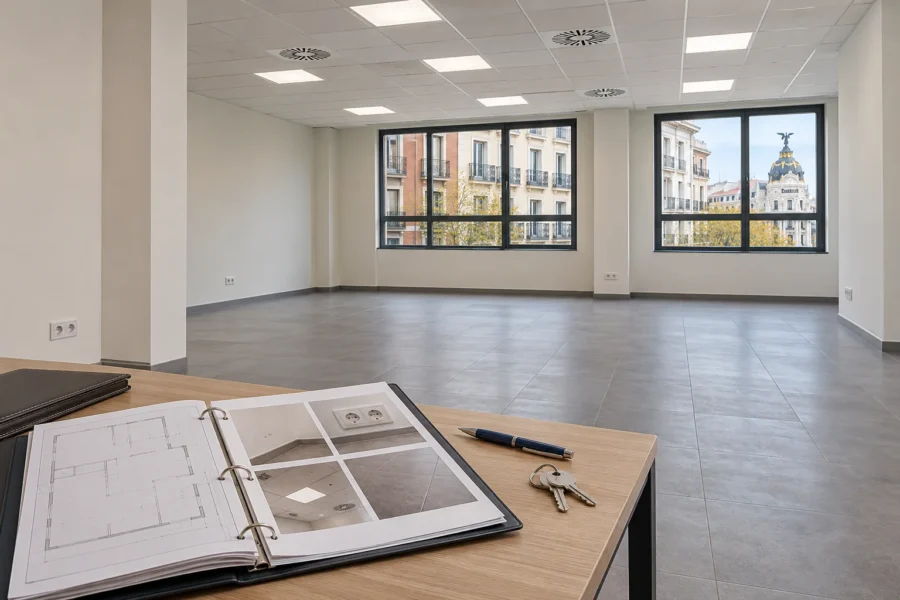
Stage 1: Inspect the Property and Define the Scope
Review installations, dampness, windows, flooring, kitchen, bathroom and overall condition.
Separate essential repairs from optional improvements and obtain a quotation with clearly defined work items.
Stage 2: Plan and Complete the Work
Coordinate trades in a logical order: essential repairs and installations, substrate preparation, flooring and finishes, painting, fitting and final adjustments.
Check any required permits, technical documentation and authorisations before starting.
Stage 3: Final Inspection and Professional Cleaning
Before completion, check doors, taps, drainage, electrical fittings, equipment, seals and finishes.
Resolve outstanding defects and arrange a thorough post-renovation clean.
Stage 4: Property Photography and Listing
Photographs should accurately represent the finished property in a clean, tidy and well-lit condition.
The listing should clearly describe the layout, facilities, rental conditions, availability and applicable energy performance information.
Practical tip: take the final photographs after all finishing work is complete. Unfinished kitchen units, exposed tools or incomplete details can undermine an otherwise attractive presentation.
Renovation Permissions and Rental Requirements in Madrid
Before starting building work, landlords should establish which administrative procedures apply to the proposed alterations.
In Madrid city, some works may not require an urban planning authorisation, while others may require a responsible declaration or a licence. The applicable procedure depends on the scope of the work, the property and the relevant circumstances.
Requirements relating to habitability, safety, building installations, energy performance and owners’ association rules must also be considered.
For current guidance, consult the Madrid City Council, the Community of Madrid or a suitably qualified professional.
Property owners should also verify any applicable tenancy legislation before setting rental terms or making financial assumptions.
Rental Property Renovation Checklist
Use this checklist before marketing your Madrid property:
- ☐ Inspect the property for defects and safety concerns.
- ☐ Identify and resolve dampness or leaks.
- ☐ Check electrical, plumbing, heating and cooling systems.
- ☐ Assess paintwork and flooring.
- ☐ Inspect kitchen units, appliances and storage.
- ☐ Review bathroom fittings, ventilation and seals.
- ☐ Check windows, shutters and insulation.
- ☐ Define the intended tenant profile.
- ☐ Set a realistic budget and schedule.
- ☐ Verify permissions and required documentation.
- ☐ Inspect completed work and resolve outstanding defects.
- ☐ Arrange professional cleaning.
- ☐ Take accurate, high-quality photographs.
- ☐ Check the energy certificate and other applicable documents.
- ☐ Publish the listing with a realistic availability date.
Conclusion: Renovate for Rental Value, Not Simply to Spend More
The renovations that may help rent out a property faster in Madrid are not necessarily the most expensive.
In many cases, fresh paintwork, repaired flooring, effective lighting and targeted kitchen and bathroom improvements can provide greater practical value than a costly cosmetic refurbishment.
The right approach starts with the property’s existing condition, the intended tenant profile and a realistic assessment of investment costs and potential benefits.
Address safety and functional problems first. Then improve the features that influence everyday comfort and usability. Finally, decide whether additional decorative work is justified.
At Maceta y Cortafrío, we undertake residential renovation projects in Madrid, including work intended to prepare properties for sale or rental.
We help owners and investors assess the condition of their properties, define a suitable construction scope and coordinate the renovation work required.
Find out more about our property renovation service for investors in Madrid, or contact Maceta y Cortafrío on WhatsApp to discuss your project.