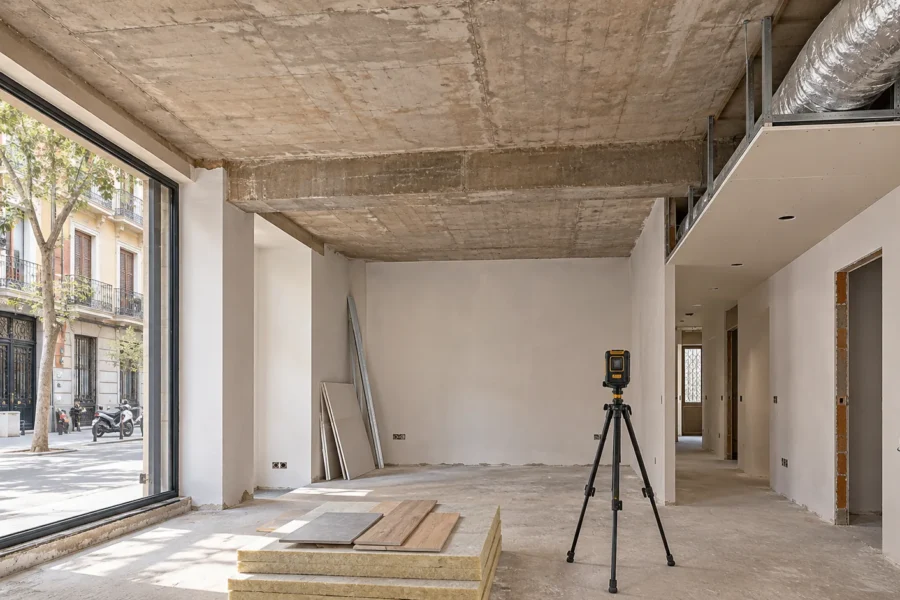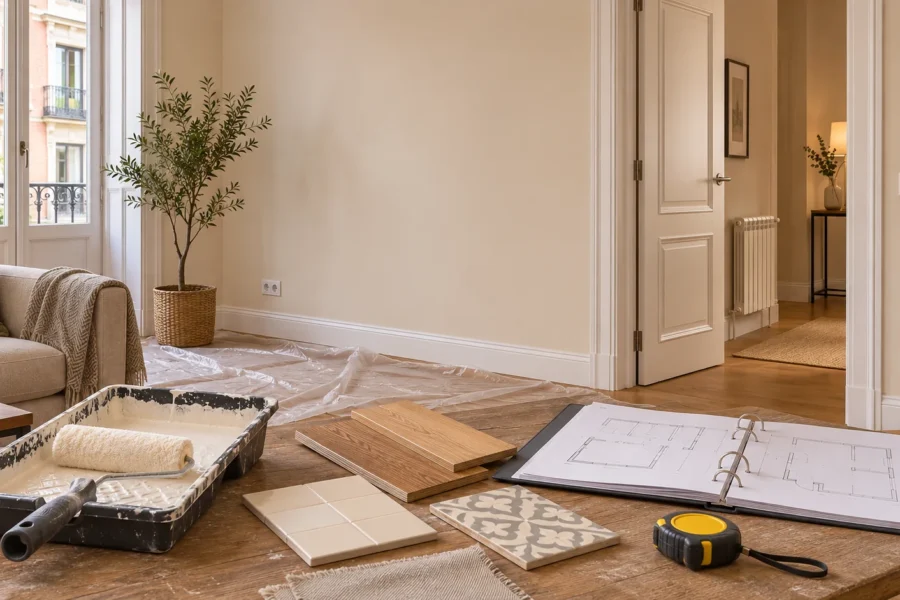
Madrid City Council has launched MADRIDdbp (Digital Building Permits), a digital platform designed to streamline urban-planning and building permit procedures by automating certain checks on proposed construction projects.
The initiative represents an important development in Madrid’s transition towards digital planning administration. However, it does not mean that every building permit can now be obtained instantly, or that homeowners renovating existing properties can already use the new system.
On 9 October 2026, Madrid City Council signed collaboration agreements with five organisations to begin piloting MADRIDdbp. The initial rollout will focus on selected residential developments before potentially expanding to other areas and types of projects.
For international homeowners, property investors and developers, the key questions are practical: what exactly is changing, which building projects will benefit, and what should you do if you are planning a renovation or commercial-to-residential conversion in Madrid?
This guide explains the announcement, how the technology works and what it means for property owners who need to navigate Spain’s planning and construction requirements.
What is MADRIDdbp and what is it designed to do?
MADRIDdbp is a Madrid City Council initiative intended to automate some of the urban-planning compliance checks normally carried out when reviewing building projects.
Planning applications can involve numerous technical and regulatory requirements, including:
- Maximum permitted building heights.
- Allowable floor area and development density.
- Building positioning and setbacks.
- Land use and planning compatibility.
- Conditions affecting the plot or surrounding urban environment.
- Other essential urban-planning parameters.
Traditionally, these requirements involve reviewing project documentation and comparing it with the relevant planning regulations.
MADRIDdbp aims to automate certain checks using structured digital information, allowing professionals to identify possible non-compliance issues earlier in the design process.
The platform does not remove planning regulations or replace the need for compliant technical projects. Its purpose is to make selected regulatory checks more efficient.
How will MADRIDdbp work?
The platform combines two established technologies used in architecture, engineering and urban development: Building Information Modelling (BIM) and Geographic Information Systems (GIS).
1. BIM: a digital model containing building information
Building Information Modelling, commonly known as BIM, is a methodology for creating and managing digital representations of buildings.
Unlike a conventional architectural drawing, a BIM model can contain structured information about the building’s geometry, dimensions, surfaces and technical characteristics.
These data can be used to assess specific requirements without relying entirely on manual interpretation of drawings.
According to Madrid City Council, MADRIDdbp will work with three-dimensional building models using the open IFC file format.
2. GIS: understanding the location and planning conditions
Geographic Information Systems connect digital information with specific geographic locations.
In urban planning, this makes it possible to analyse a proposed development in relation to the relevant plot, its surroundings and applicable planning conditions.
By combining BIM models and geographic data, MADRIDdbp is designed to compare characteristics of a proposed building with selected urban-planning requirements.
3. Pre-submission checks through the Developer Portal
Another key feature is the planned Portal del Promotor, or Developer Portal.
Through this platform, eligible users are expected to be able to:
- Consult relevant urban-planning information.
- Upload a digital building model.
- Run preliminary compliance checks.
- Identify errors or potential regulatory conflicts.
- Revise the project before submitting the relevant application.
The intended process may help reduce avoidable errors during project preparation.
Where the relevant requirements are met, MADRIDdbp is designed to support the automated issue of an Informe de Viabilidad Urbanística (IVU), an Urban Planning Feasibility Report, which can facilitate the subsequent granting of a licencia básica, or basic building licence.
These are specific Spanish administrative procedures. A favourable preliminary check should not be interpreted as permission to undertake any type of construction or renovation without meeting the applicable legal requirements.
When will MADRIDdbp become available in Madrid?
On 9 October 2026, Madrid City Council announced collaboration agreements involving five organisations participating in the pilot phase:
- EMVS Madrid, the city’s municipal housing and land company.
- Vía Ágora.
- Pryconsa.
- Touza Arquitectos.
- Ortiz León Arquitectos.
The initial deployment is focused on residential development projects in Los Berrocales.
The municipality also plans to extend the initiative progressively to other major urban developments:
- Los Ahijones.
- Valdecarros.
- Los Cerros.
- Madrid Nuevo Norte.
- Campamento.
According to the City Council, these six development areas collectively represent plans for more than 124,000 homes.
The first phase is expected to incorporate approximately 50 automated urban-planning rules, with further checks and functionalities added as the system develops.
As of 10 October 2026, there is no confirmed timetable establishing when MADRIDdbp will become generally available for private home renovations or commercial property conversions throughout Madrid.
Will MADRIDdbp make building permits available immediately?
Faster, potentially near-instant processing for certain procedures is one of the municipality’s stated objectives.
However, there is an important distinction between automatically checking selected planning requirements and obtaining every permission necessary to carry out construction work.
A project may require additional documentation, technical assessments or legal checks beyond the rules that can be automated.
Madrid already has an Urban Planning Feasibility Report procedure, known as the IVU, which can be used to assess essential planning requirements before obtaining certain authorisations.
The new platform aims to automate relevant stages of that assessment.
It is therefore misleading to assume that any homeowner, architect or developer can now upload plans and immediately receive unconditional permission to begin work.
The correct administrative route still depends on the project and the regulations applying to the property.
Does MADRIDdbp affect full home renovations in Madrid?
This is particularly relevant for international homeowners who are planning to renovate a flat, townhouse or detached property in Madrid.
The initial MADRIDdbp rollout is mainly aimed at new residential building developments. It has not been announced as a general replacement for the procedures governing interior renovations of existing homes.
For example, a homeowner in Chamberí who wants to renovate a kitchen, replace plumbing and electrical installations, and change the internal layout of a flat should not assume that their project can now be processed through MADRIDdbp.
The same applies to an extensive refurbishment in Salamanca, Retiro or Chamartín.
The applicable procedure will depend on the nature of the work, the property itself and the relevant planning requirements.
What if I want to renovate my entire apartment?
A full renovation in Madrid may involve:
- Internal demolition and removal of existing finishes.
- Electrical system replacement or upgrades.
- Plumbing and drainage improvements.
- Changes to non-structural partitions and room layouts.
- Bathroom and kitchen renovations.
- New flooring, wall finishes and interior joinery.
- Alterations to heating, cooling or ventilation systems.
These activities do not necessarily fall under the same administrative procedure.
Before construction begins, the owner should establish whether the work is exempt from municipal planning control or requires a declaración responsable (responsible declaration), a formal planning licence or specific technical documentation.
Special conditions may also apply where the property is listed, protected, structurally altered or located in a building with shared elements.
At Maceta y Cortafrío, we provide full renovation services in Madrid, coordinating construction trades and planning the different stages of work around the property’s condition, the agreed scope and any applicable technical requirements.
What about converting commercial premises into residential property?
Commercial-to-residential conversions are another important consideration for property investors in Madrid.
However, MADRIDdbp does not automatically authorise changes of use, nor does its launch mean that the requirements for converting commercial premises into homes have been relaxed.
Converting a shop, office or other commercial unit into a legal residential property requires a separate assessment of its technical and planning feasibility.
Depending on the property, that assessment may involve:
- Whether residential use is permitted under the applicable planning rules.
- Natural lighting and ventilation requirements.
- Minimum heights and suitable room layouts.
- Accessibility and building safety.
- Drainage and other building services.
- Thermal performance, acoustic insulation and habitability.
- Restrictions affecting the building or its communal areas.
- Any relevant heritage or protected-building conditions.
Digital planning checks may eventually make parts of the feasibility assessment easier, provided the relevant procedures are incorporated into the platform.
However, digitalisation cannot make a non-compliant project legally viable.
If you are considering this type of investment, explore our commercial-to-residential conversion services in Madrid.
For other business and property uses, our guide to adapting commercial premises to new uses explains the main technical and financial decisions to consider before committing to a refurbishment.
What planning permissions and renovation procedures still apply in Madrid?
The introduction of MADRIDdbp does not generally replace Madrid’s existing planning and building control procedures.
Within the municipality of Madrid, the main local framework is Ordenanza 6/2022, de Licencias y Declaraciones Responsables Urbanísticas del Ayuntamiento de Madrid (OLDRUAM).
For English-speaking property owners, it is important to distinguish between three common situations.
1. Works that do not require municipal planning intervention
Certain internal maintenance or refurbishment activities may fall outside the municipal planning licence and responsible declaration procedures, provided they meet the conditions established by the applicable legislation.
This should not be confused with a general exemption for all small projects.
Work involving protected elements, structural changes or other specific circumstances may be subject to additional controls, even when the physical intervention appears limited.
2. Works subject to a declaración responsable
A declaración responsable urbanística is a Spanish responsible declaration.
Under this procedure, the applicant formally declares that the proposed work complies with the relevant requirements and that the necessary supporting documentation is available.
The declaration does not eliminate the obligation to comply with planning and technical regulations.
The City Council retains its inspection and enforcement powers, and any conditions governing when the works may begin must be respected.
English-speaking owners should not assume that this document is equivalent to obtaining a formal planning licence in advance.
3. Works requiring a formal licencia urbanística
Other projects require a municipal planning licence, known as a licencia urbanística.
Depending on the intervention, this can involve architectural or technical projects, supporting documents and specific assessments.
Madrid also has a licencia básica procedure for eligible developments, particularly certain new-build and major restructuring projects.
These procedures are governed by specific legal conditions and should not be treated as interchangeable.
Official information can be found through the Madrid City Council’s planning licences and responsible declarations information.
Important for international property owners: MADRIDdbp is a Madrid City Council initiative. A property in Pozuelo de Alarcón, Majadahonda, Las Rozas or another municipality within the Madrid Region is subject to the procedures of its own local authority.
Being located within the Community of Madrid does not automatically mean that the same municipal licensing procedures apply.
What benefits could digital building permits bring?
If MADRIDdbp achieves its objectives and is successfully expanded, it could offer several advantages for the construction and property sectors.
Earlier identification of planning issues
Automated checks could identify certain regulatory conflicts during project preparation rather than later in the application process.
This may help design teams correct issues before submitting documentation.
Better coordination between project professionals
Structured digital information and open technical standards may improve collaboration between architects, engineers and other specialists involved in a development.
Greater transparency in technical checks
Digital records may make it easier to understand which planning parameters have been checked and which issues remain unresolved.
Potentially less repetitive administrative work
Automating routine checks could allow technical staff to concentrate on assessments requiring professional interpretation and judgement.
These are potential benefits and stated objectives, not proven reductions in costs or processing times for every type of building project.
How to prepare a renovation while MADRIDdbp is being developed
Even as planning administration becomes more digital, careful project preparation remains essential.
At Maceta y Cortafrío, we recommend approaching a renovation through a structured process before demolition or construction begins.
1. Define the actual scope of work
Start by distinguishing decorative improvements from work affecting the layout, installations, structure, exterior appearance or authorised use of the property.
This helps identify which technical and administrative requirements may apply.
2. Review the building’s characteristics
Age, condition, existing installations, structural elements and possible heritage protection can significantly influence what is technically feasible.
In older Madrid apartment buildings, shared installations and communal elements may also affect the proposed work.
3. Establish the correct administrative procedure
Before starting construction, check whether the project requires a planning licence, a responsible declaration or other specific documentation or authorisation.
The correct procedure should be assessed against the property and the actual scope of the intervention.
4. Arrange the necessary technical documentation
Where architectural or engineering documentation is required, it must be prepared by appropriately qualified professionals.
This is especially important for interventions involving structural changes or changes of use.
5. Prepare an itemised renovation budget
A well-defined quotation should identify the principal work packages, including demolition, masonry, electrical works, plumbing, finishes and joinery.
Professional fees, administrative costs, waste management and any other applicable expenses should also be considered.
An initial estimate should not be treated as a guaranteed final price before the property and proposed scope have been assessed.
6. Coordinate the construction programme with the required permissions
The project schedule should reflect the legal requirements governing when work may begin.
It should also account for material lead times, access arrangements and dependencies between the different construction trades.
7. Keep appropriate records throughout the work
Photographs, technical documents, certificates where required and records of agreed variations help maintain a clearer project history.
This is particularly useful when building services or technical work will later be concealed behind walls, ceilings or floor finishes.
For a more detailed approach, read our guide to planning a full renovation in Madrid.
Frequently asked questions about MADRIDdbp
Is MADRIDdbp already available to all property owners?
No. The October 2026 announcement concerns a pilot phase and progressive rollout, initially focusing on major residential developments. General availability for private renovation projects has not been confirmed.
Can I use MADRIDdbp to get immediate permission to renovate my flat?
Not necessarily. The platform’s objective is to automate selected planning checks, rather than provide unconditional or immediate permission for every type of building work.
Will MADRIDdbp replace architects?
No such replacement has been announced. The platform is intended to support regulatory checking. Projects will still require the technical professionals and documentation established by the applicable legislation.
Will BIM become compulsory for every renovation in Madrid?
The use of BIM is fundamental to MADRIDdbp, but launching the platform does not, by itself, establish a general obligation to use BIM for every residential or commercial renovation.
Will converting commercial premises into homes become easier?
There is currently no confirmation that individual commercial-to-residential conversions are covered by the first phase of MADRIDdbp. Future digital improvements would not remove the underlying technical or planning requirements.
Does MADRIDdbp apply throughout the Madrid Region?
No. MADRIDdbp is a Madrid City Council project. Other municipalities within the Community of Madrid operate under their own applicable local planning procedures.
Do foreign property owners follow different planning rules?
In general, the planning and building requirements depend on the property, its location and the proposed work, rather than the owner’s nationality.
International owners may need additional assistance understanding Spanish administrative terminology, arranging representation or preparing documents, but the renovation must comply with the same applicable technical and planning framework.
For homeowners and investors, the practical advice is unchanged: establish whether your project is technically and legally feasible, identify the applicable administrative procedure and prepare a clear renovation plan before committing to construction.
Planning a property renovation in Madrid?
A well-managed renovation begins long before demolition work starts.
Maceta y Cortafrío specialises in full renovations of homes, commercial premises and professional spaces throughout the Community of Madrid.
We assess the scope of the proposed works, review the property’s construction requirements and coordinate the different trades involved in delivering the renovation.
Where specific architectural, engineering or regulatory documentation is required, appropriately qualified professionals must be involved.
Are you planning to renovate a property or convert commercial premises in Madrid?
Tell us about the property, its location and the changes you are considering. We can discuss your renovation requirements and help you determine the next practical steps.
Contact Maceta y Cortafrío to request an initial renovation assessment.
Information reviewed on 10 October 2026. MADRIDdbp’s scope and implementation timetable may change. Before proceeding with construction or renovation, verify the current requirements for the specific property and municipality. This article is general information and does not replace a project-specific technical or legal assessment.