How to Prepare a Second Home for Rental When You Live in Madrid
You may own a house in the mountains, a coastal flat or a family property that you only use for a few weeks each year. Letting it out could help you make better use of it. First, though, ask yourself: is it ready for someone else to live in without constantly needing your help?
To prepare a second home for rental, you need to assess its condition, decide how it will be let, identify worthwhile improvements and organise maintenance. If you live in Madrid and the property is some distance away, even a small fault can involve travel, coordination and time.
This guide will help you put those decisions in order. The regional and local rules to check are those where the property is located, even if your main home is in Madrid. The legal context throughout this article is Spain.
Legal information checked: 3 September 2026.
1. Decide Which Type of Rental Fits Your Plans
Before buying furniture or commissioning work, decide whether you want ongoing rental income or still intend to use the property at certain times. This affects the agreement, the equipment you provide and the management involved.
- A tenancy as the tenant’s main home: this meets a permanent housing need. Consider the applicable duration and extension rights; do not assume you can take the property back every summer as you might with a holiday let.
- A temporary tenancy: an arrendamiento de temporada meets a genuine temporary need, such as a work placement or a period of study. An eleven-month term alone does not make an agreement a temporary tenancy.
- Tourist accommodation: check the applicable tourism, planning and owners’ association requirements, and arrange arrivals, cleaning and support during each stay.
The distinction between main-home tenancies, temporary tenancies and certain tourist lets follows Articles 2, 3 and 5 of Spain’s Urban Leases Act (Ley de Arrendamientos Urbanos). Obtain legal advice on the appropriate arrangement before marketing the property.
Practical recommendation: if you want less day-to-day management and do not need personal use of the property during the tenancy, start by assessing a main-home tenancy. If you want to reserve dates for yourself, establish which arrangement is legally viable and whether its management costs make sense.
2. Check What Is Permitted Before Investing
Do not assume tourist use is allowed because other properties in the building appear on booking websites. Consult the local council and the relevant regional authority before commissioning a renovation designed for that use.
For properties in the Madrid Region, the official guidance on tourist accommodation lists requirements including a certificate of suitability for tourist use (CIVUT), public liability insurance, planning compliance and owners’ association conditions. For Madrid city, it specifies an activity and operating licence. A tourism declaration does not replace these checks.
If you intend to advertise short stays through online platforms, also check the current registration and identification requirements. The consolidated text of Royal Decree 1312/2024 includes notes on provisions annulled by court judgments published in 2026. Do not rely solely on a 2025 guide for this procedure.
Check any applicable occupancy or habitability documents, restrictions affecting the property and permissions needed for the proposed works. If your second home is outside the Madrid Region, consult the authorities responsible for that location.
3. Inspect What Could Go Wrong While You Are Away
A property used for occasional weekends may have faults that only become apparent with daily occupation. Arrange a professional inspection and distinguish safety issues and necessary repairs from cosmetic improvements.
- Damp and water ingress: investigate stains, smells, joints, roofs and terraces. Identify and address the cause before repainting.
- Electrical installation: have a suitably authorised professional assess its condition and protective devices, particularly if you plan to add appliances.
- Plumbing and drainage: check for leaks and assess water pressure, isolation valves, toilet cisterns and drainage.
- Hot water, heating and cooling: verify operation, maintenance and ease of use.
- Windows, shutters and doors: inspect locks, fittings and signs of draughts or water ingress.
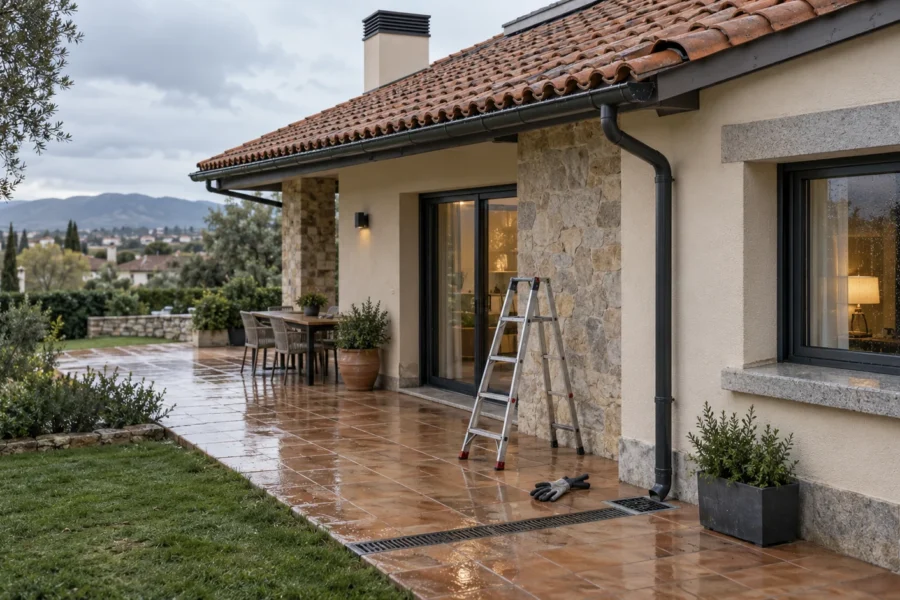
- Outdoor areas: inspect balustrades, steps, lighting and paving, including the garden and swimming pool where present.
For a house in the Madrid mountains, pay particular attention to winter conditions. For a coastal flat, check for corrosion and deterioration linked to the marine environment. The inspection should reflect the property’s actual location and condition.
4. Choose Between a Refresh, a Partial Renovation and a Full Renovation
Not every second home needs a full renovation. The right scope addresses its shortcomings and suits the intended rental arrangement.
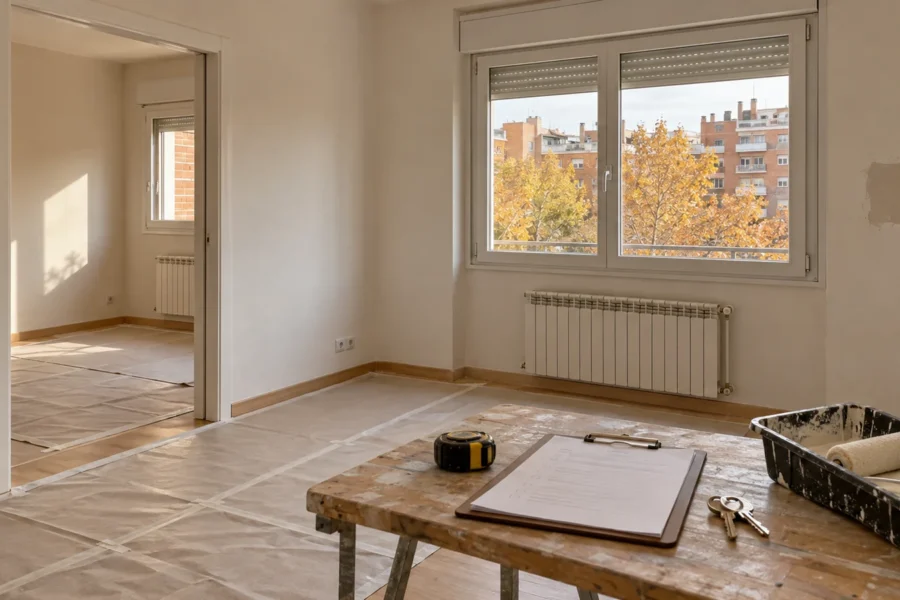
- A refresh: suitable when the building services and layout work well. This may include minor repairs, decorating, adjustments to doors and windows, lighting improvements and a deep clean.
- A partial renovation: useful when problems are concentrated in a bathroom, the kitchen or particular building services.
- A full renovation: worth assessing when deteriorating services, worn finishes and an impractical layout all need attention.
If most problems are in the bathroom, a bathroom renovation in Madrid can address them as one coordinated project. If several areas need work, consider a full renovation with measured quantities and an itemised scope.
Hypothetical example: a house with a serviceable kitchen, leaking bathroom fittings and unreliable heating should prioritise repairs and comfort. Replacing a functioning kitchen purely for its appearance can wait.
5. Choose Durable Finishes and Straightforward Equipment
Think about cleaning, repairs and replacement parts. An attractive finish becomes less appealing if it needs demanding maintenance between occupancies.
- Choose flooring suited to the use and moisture conditions of each room.
- Use washable paint where appropriate and keep the colour references.
- Prioritise taps and fittings with readily available spare parts.
- If letting furnished, provide stable furniture, sufficient storage and washable fabrics.
- Avoid complicated equipment that needs frequent explanations.
Remove personal documents, family photographs and sentimental belongings. Keep anything useful and in good condition: preparing a rental does not mean replacing every piece of furniture.
Provide beds, chairs and kitchenware appropriate to the intended occupancy. Test the internet connection if you plan to include it, and only advertise features you have verified.
6. Improve Comfort and Prepare the Energy Certificate
Before fitting more powerful heating or cooling equipment, assess windows and other external building elements, solar exposure, insulation and ventilation. These should be considered together: improving airtightness without adequate ventilation can create new problems.
As a general rule, a property let to a new tenant needs a Spanish energy performance certificate (certificado de eficiencia energética), subject to the applicable legal exemptions. Check its validity and registration, include the energy label in advertising and prepare the documents to be provided under Royal Decree 390/2021.
If you will be changing elements that affect the rating, agree with the qualified assessor when to issue or update the certificate so that it reflects the completed property.
7. Include Management Costs in Your Figures
Do not assess returns solely against the advertised rent. Before deciding how much to invest, separate the costs into two groups:
- Initial investment: inspections, works, equipment, documentation, professional fees, administrative costs and applicable taxes, plus a contingency appropriate to the inspection findings.
- Ongoing costs: owners’ association charges, insurance, maintenance, utilities you pay for, management, cleaning where relevant and periods without tenants or guests.
Compare rents with similar properties in the same municipality and rental category. Advertised prices are asking figures, not guaranteed income.
Request a quotation that separates materials, labour, waste removal, exclusions and taxes. Renovation costs depend on floor area, condition, building services, specifications and scope. A fixed figure without that information could be misleading.
8. Organise Renovation and Maintenance from Madrid
If you cannot visit regularly, agree who will make decisions and how changes will be approved. Video calls can support progress updates, but they cannot replace an on-site inspection when one is needed.
- Before work begins: record the scope, materials, access arrangements and proposed programme in writing.
- During the works: request progress photographs and records of services before they are concealed; approve changes to scope or cost in writing.
- At handover: check operation, finishes and cleanliness, and record any outstanding defects.
- During the rental: appoint a local contact for faults and agree a response procedure and spending authorisation process.
Create a digital folder containing warranties, invoices, manuals, material references and contacts. Provide occupants with concise instructions for equipment, water isolation valves and reporting problems.
9. Your Checklist Before Advertising
- The rental arrangement is defined and the applicable requirements have been checked.
- Works are complete and defects affecting safety or use have been resolved.
- Hot water, heating, cooling, shutters and appliances have been tested.
- The final clean is complete and personal belongings have been removed.
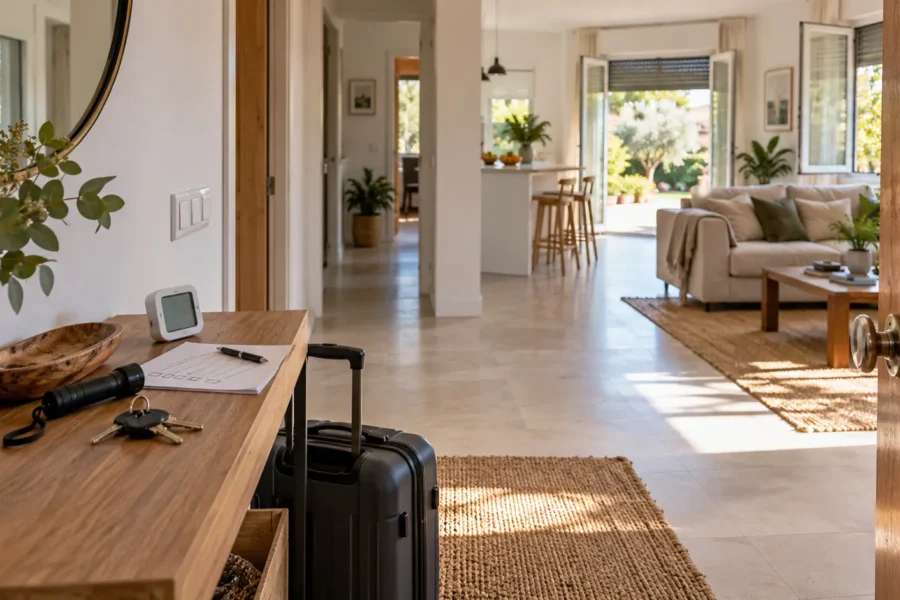
- An inventory with photographs records the actual condition if the property is furnished or equipped.
- The energy certificate and label are ready where required.
- The agreement, deposit and other procedures have been reviewed for the rental category and location.
- Insurance reflects the intended use and maintenance arrangements are in place.
- The listing uses genuine photographs and accurately describes the property.
Avoid advertising an availability date that depends on unfinished work or outstanding approvals. If you use visualisations to plan improvements, label them as proposals rather than photographs of the finished property.
Prepare Your Second Home with a Clear Scope of Work
A home prepared for rental should be practical, straightforward to maintain and suitable for the agreed use. A sound investment starts with knowing what to keep, what to repair and what to replace.
If your second home is in the Madrid Region, Maceta y Cortafrío can assess its renovation needs. Tell us its municipality, approximate floor area and intended rental arrangement. This will help us guide the initial assessment and identify the next steps.