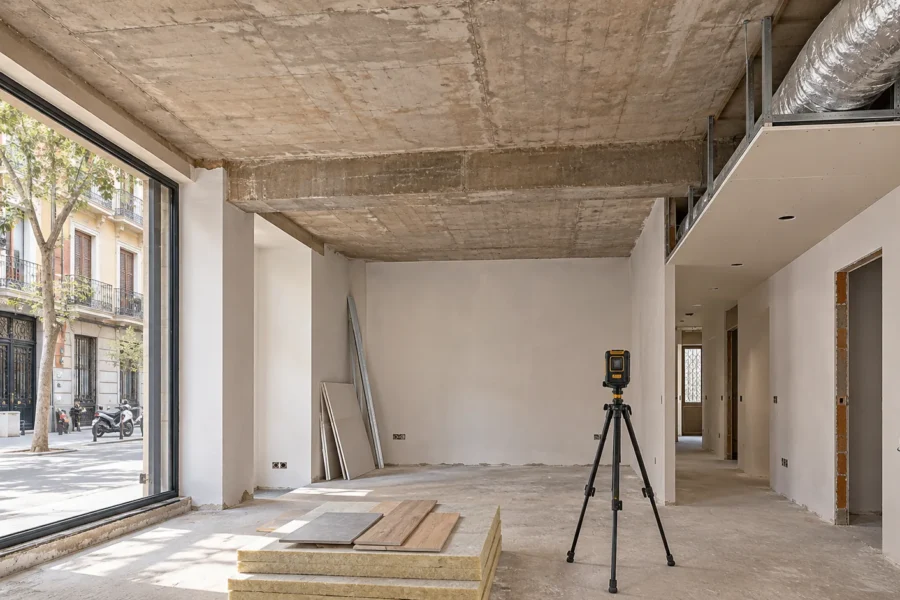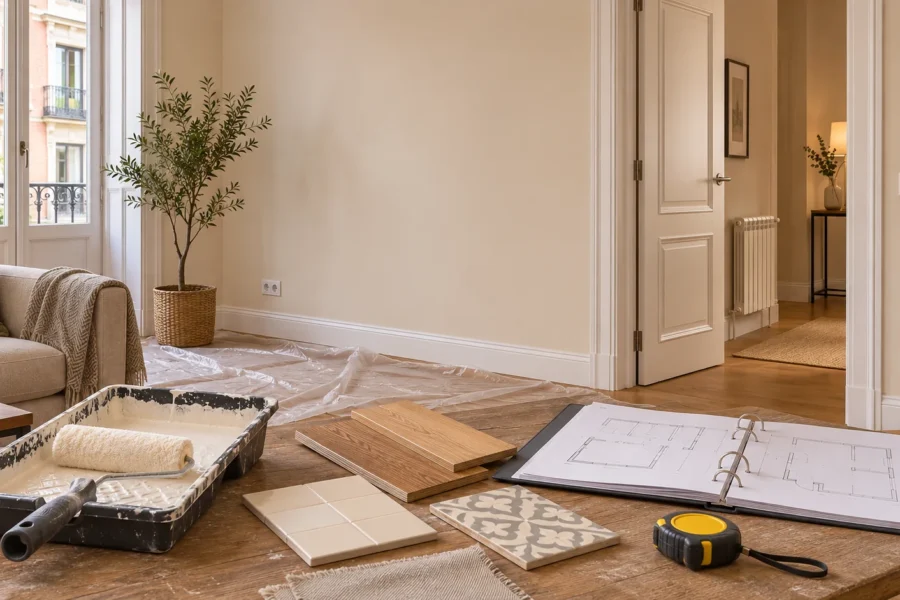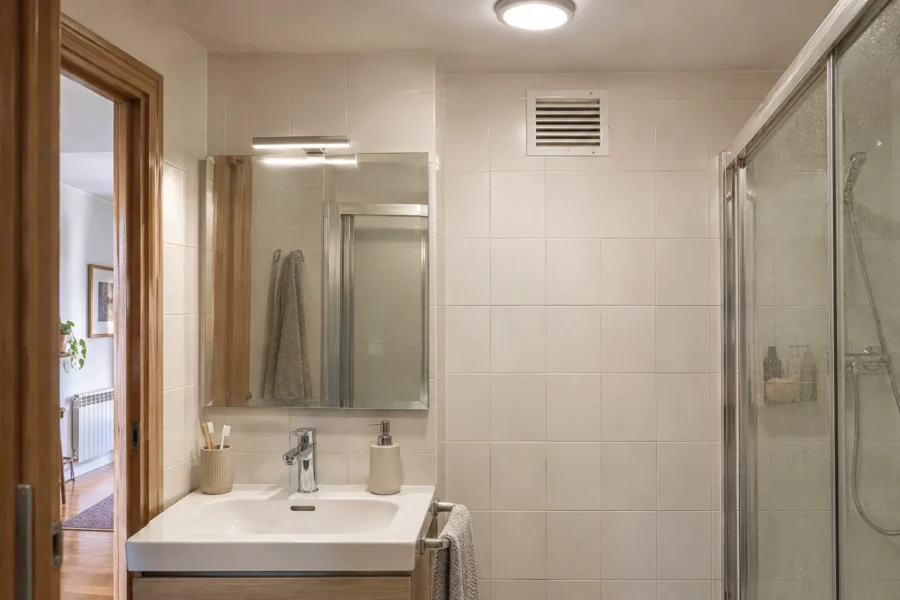
If you are planning a full home renovation in Madrid, you may be wondering whether local planning rules are about to change and how those changes could affect your project. Madrid City Council has launched a public consultation on a proposed new urban planning ordinance, but no new ordinance has yet been approved.
For homeowners, international property buyers and investors, understanding the distinction between existing requirements and proposed changes is essential. Here is what we know so far and what you should check before starting renovation work.
What new urban planning regulations is Madrid proposing?
Madrid City Council is considering introducing a new Municipal Urban Planning Ordinance (Ordenanza Urbanística Municipal) to consolidate and simplify certain planning rules currently contained in the city’s 1997 General Urban Development Plan and other municipal provisions.
The initiative is being developed by Madrid City Council’s Department of Urban Planning, Environment and Mobility. Its main objective is to make the applicable rules clearer, more accessible and easier to update.
According to the official public consultation, the future ordinance could address several areas relevant to property owners, including:
- Permitted uses of land and buildings.
- Types of construction and renovation work allowed.
- Building conditions and requirements.
- Property conservation and rehabilitation.
- Architectural appearance and aesthetic considerations.
- Interventions affecting protected or listed buildings.
However, these proposals do not mean that additional requirements already apply to every home renovation in Madrid. The council is considering the future regulatory framework, not implementing a final approved document.
Public consultation: 5–19 October 2026
Madrid City Council’s Governing Board agreed to launch the consultation process on 1 October 2026. The decision was published in the municipal official gazette on 5 October 2026.
The public consultation runs from 5 to 19 October 2026, inclusive. As of 12 October 2026, the consultation remains open.
Residents, professionals and organisations can review the initiative through the Decide Madrid public participation platform. Online participation is subject to the platform’s registration and verification requirements.
This is an initial consultation conducted before the proposed regulatory text is drafted. The final wording, approval date and possible entry into force have not been established.
For anyone already planning renovation work, the practical message is straightforward: stay informed, but do not assume that an existing renovation project must be suspended because of the announcement.
How could the new rules affect a full home renovation in Madrid?
A clearer urban planning ordinance could make it easier for homeowners and technical professionals to understand which interventions are compatible with a particular building.
This could be especially relevant when renovating an older apartment, altering external elements, rehabilitating a building or considering a change of use.
Nevertheless, any specific consequences will depend on the final approved provisions.
Internal renovation and replacement of installations
Replacing flooring, wall finishes, kitchen fittings, bathroom fixtures or internal installations does not automatically mean that the proposed ordinance will introduce additional procedures.
Each intervention must be assessed according to its actual scope and the regulations currently in force.
Significant layout changes
Removing partitions, reorganising circulation routes or carrying out work affecting structural elements may require a technical feasibility assessment and appropriate documentation.
It is important to establish which elements are structural before demolition begins.
Façades, communal areas and protected buildings
Renovations involving external openings, building façades, shared areas or protected architectural elements can be subject to additional restrictions.
These conditions should be identified before choosing materials, finalising the design or committing to construction work.
The proposal also refers to building conservation and rehabilitation. However, it would be incorrect to claim that new accessibility or energy-efficiency upgrades will become compulsory for all homeowners on the basis of this consultation alone.
What should you check before renovating a property in Madrid?
1. Planning permission, responsible declaration or exempt works
Not every renovation follows the same administrative procedure.
Within the municipality of Madrid, Ordinance 6/2022 on Urban Planning Licences and Responsible Declarations establishes the principal municipal procedures applicable to different types of work.
Depending on the nature of the project, an intervention may require:
- Licencia urbanística: a municipal planning licence or authorisation.
- Declaración responsable urbanística: a formal declaration stating that the applicable requirements are met and the necessary supporting documentation is available.
- No specific municipal planning procedure: where the work is not subject to either of the previous procedures.
A declaración responsable should not be confused with permission to disregard building regulations. The person submitting it remains responsible for meeting the applicable legal and technical requirements.
The proposed new ordinance does not automatically replace the existing rules governing these procedures.
2. Technical feasibility and property condition
Before approving the renovation layout, review the property’s structure, partitions, drainage, plumbing and electrical installations.
For example, replacing a kitchen while keeping the original service connections is not technically equivalent to relocating the kitchen to another part of the apartment.
Where structural work or a technical project is required, appropriately qualified professionals must be involved.
3. Accessibility and building safety
Changes in floor levels, narrow doorways, difficult bathroom layouts and evacuation routes should be considered at the planning stage.
The applicable requirements depend on the property and the intervention being carried out, not simply on the proposed ordinance.
If accessibility is one of your priorities, explore our accessible home renovation services in Madrid.
4. Energy efficiency and external building elements
If your renovation includes replacing windows, improving insulation or upgrading heating and cooling systems, review the relevant technical standards and any restrictions affecting the façade or communal elements.
Although the future ordinance may address certain external building interventions, the consultation does not establish specific new energy-performance obligations.
5. Heritage protection and homeowners’ association requirements
Listed buildings and properties located within protected areas may be subject to restrictions affecting windows, façades, external openings and architectural details.
Owners should also establish whether the proposed work requires consultation with, or authorisation from, the building’s homeowners’ association (comunidad de propietarios).
An early technical inspection and planning review can prevent unsuitable solutions from being incorporated into the renovation design.
6. Budget, documentation and scheduling
A renovation quotation should clearly identify demolition, installations, finishes, waste management and other included work.
Allow time for determining the applicable municipal procedure, preparing drawings or technical documents when required, and coordinating the different trades.
There is no basis for assigning additional costs or delays to a future ordinance before its requirements have been established.
If several rooms or installations are involved, it is also worth considering whether a comprehensive renovation or a phased approach is more appropriate. Our guide to full versus phased renovations in Madrid explains the main differences.
Practical recommendations for property owners
If you are considering renovating an apartment, house or commercial property, these steps can help you prepare the project more effectively.
- Define the scope in writing: identify which elements will remain, what will be removed and which installations will change.
- Check the correct municipality: the proposed ordinance concerns Madrid city. Properties in Pozuelo de Alarcón, Alcobendas, Getafe and other municipalities within the Madrid Region are subject to their respective local planning regulations.
- Review building restrictions: establish whether the property has heritage protection, communal elements or relevant technical limitations.
- Confirm administrative requirements: obtain appropriate planning or technical advice before committing to fixed construction dates.
- Plan the construction sequence: coordinate trades, material deliveries, protection of unaffected areas and potential unforeseen conditions.
For international buyers, another important consideration is that the administrative procedure applicable to the property is determined by Spanish and local legislation, regardless of the owner’s nationality or country of residence.
Specific requirements should always be confirmed with the relevant local council or a qualified professional.
Conclusion: the proposed ordinance does not mean you need to postpone your renovation
Madrid’s public consultation represents an opportunity to review and potentially simplify the city’s urban planning framework. It does not constitute the immediate approval of new renovation obligations.
For homeowners, the most effective approach remains the same: understand the condition of the property, establish the applicable rules and prepare a technically coordinated renovation plan.
At Maceta y Cortafrío, we help property owners define renovation requirements, plan the scope of work and coordinate the different construction trades.
Whether you own a property in Madrid or are preparing an investment from abroad, careful planning can help you make informed decisions before construction begins.
Explore our full renovation services in Madrid and contact our team to discuss your property, renovation objectives and the next steps towards a personalised quotation.